Butterfly Spring, Dali: What You Will Actually See
Butterfly Spring (Hudie Quan) is a clear spring pool under trees at the foot of Cangshan, about 27 kilometres north of Dali Old Town. Go for the literary history, the shade and a butterfly museum. Do not go expecting the famous curtains of live butterflies, which have become rare. It takes one to two hours. The adult ticket is commonly listed at around 60 yuan, and it makes sense only as the last stop on a north-road day after the Three Pagodas and Xizhou. If your Dali list is already full, this is the stop to cut. The three-day plan is in the Dali travel guide.
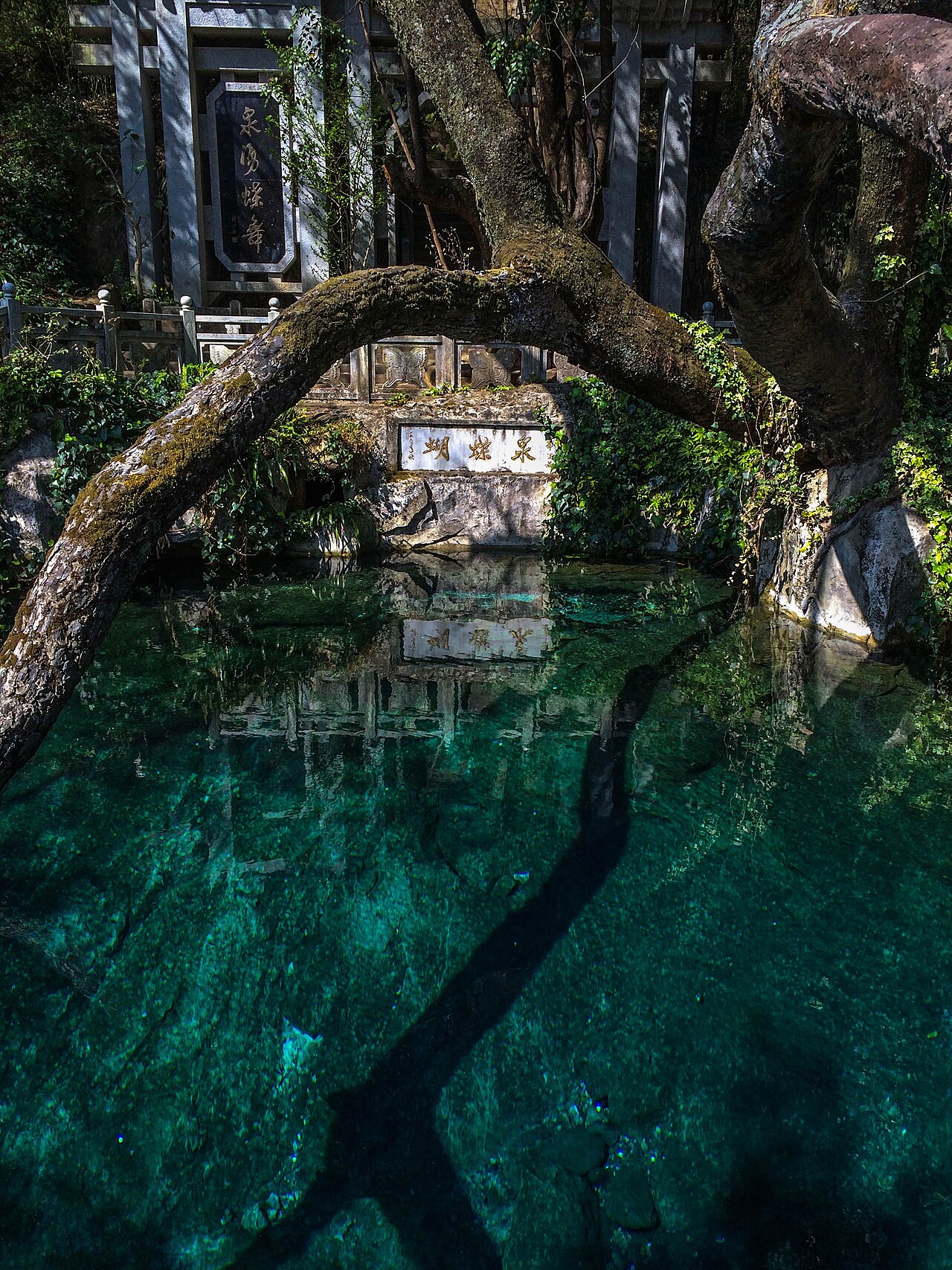
Why it became famous
The spring is a square pool of roughly fifty square metres, with water clear enough to see every pebble on the bottom. Its fame rests on two writers. In the seventeenth century the Ming traveller Xu Xiake described butterflies by the tens of thousands, linking legs and antennae into chains that hung from the branches of the tree beside the pool down to the surface of the water, in every colour. In 1961 the poet Guo Moruo visited and left lines about the butterfly tree and its butterflies "by the tens of thousands", which are still quoted on the site.
The spring is also the setting for a Bai legend of two lovers who drowned themselves in the pool and returned as a pair of butterflies. The story was retold in the 1959 film Five Golden Flowers, which made Butterfly Spring known across China.
What is there now
The swarms Xu Xiake saw are now unusual. Some visitors still report more butterflies in warm spells in spring and early summer, but treat any big display as luck. The marketing photographs show the best days, not every day.
What you can count on:
- The pool and the butterfly tree. The spring itself, clear and cold, under old trees.
- Shaded paths. The walk up from the gate climbs gently through planted gardens. It is noticeably cooler than the open lake shore.
- The butterfly museum. Cases of specimens and displays about local species and the old seasonal gatherings. Children often enjoy this more than the adults expect.
There are steps on the paths, moderate but continuous, so wear comfortable shoes. In heavy rain the stones get slippery and the visit is not worth it. Spend the time in Xizhou's covered lanes instead.
Tickets and timing
Adult admission is commonly listed around 60 yuan on the major platforms. Older official pages showed lower figures, so confirm for your date. Children under the height threshold and seniors in the usual age bands get reduced or free entry. Some ticket apps sell Butterfly Spring bundled with the Gantong cableway on Mount Cang, but the two are far apart, so buy the bundle only if you really plan to do both.
One to two hours covers the pool, the museum and a slow walk. The site is quiet first thing and busiest when tour coaches arrive late morning. On a north-road day it usually falls in mid-afternoon, which works well.
Getting there and the north road
Butterfly Spring is on the west side of National Highway 214, the old Dali–Lijiang road, north of Xizhou. Taxi drivers know it as 蝴蝶泉. Local buses run north along the highway from the old town and from Xizhou, but transfers take time, and a taxi or hired driver for the day makes the string of stops much easier.
The usual north-road day from the old town:
- Three Pagodas at opening, two to three hours.
- Xizhou for lunch, baba, a courtyard and the paddies.
- Zhoucheng, the Bai village just south of the spring, known for tie-dye. Workshops show the process of tying, dyeing in indigo vats and drying the cloth. If you want to buy tie-dye anywhere, buy it here.
- Butterfly Spring in mid-afternoon, then back to the old town for dinner.
Fit cyclists can ride the north road along the Erhai corridor and inland roads, but it is a long day with little margin for courtyard and museum time. If you hire a driver, agree on the stops and the finishing time before you set off, and ask whether parking fees are included. Drivers who do this run often will suggest the order themselves, and it usually matches the list above.
Who should skip it
Skip it if you are short on time, if you only travel for big natural spectacles, or if the forecast is for heavy rain. Do not give up a Mount Cang cableway day or a night on Erhai Lake for it. Keep it if you like literary landscapes, have children who will enjoy the specimen museum, or are already driving north to Xizhou and Zhoucheng.
Frequently asked questions
Are there still butterflies at Butterfly Spring?
Some, especially in warm spells in spring and early summer, but the dense linked swarms described by Xu Xiake are now rare. Go for the pool, the setting and the museum.
How long does Butterfly Spring take?
One to two hours for the pool, the paths and the butterfly museum.
How far is Butterfly Spring from Dali Old Town?
About 27 kilometres north, beyond Xizhou on National Highway 214. By taxi it takes roughly 40 minutes to an hour, depending on traffic.
What should I combine it with?
The Three Pagodas, Xizhou and the tie-dye workshops of Zhoucheng, all on the same northbound road.