Three Pagodas of Chongsheng Temple: Dali Visit Guide
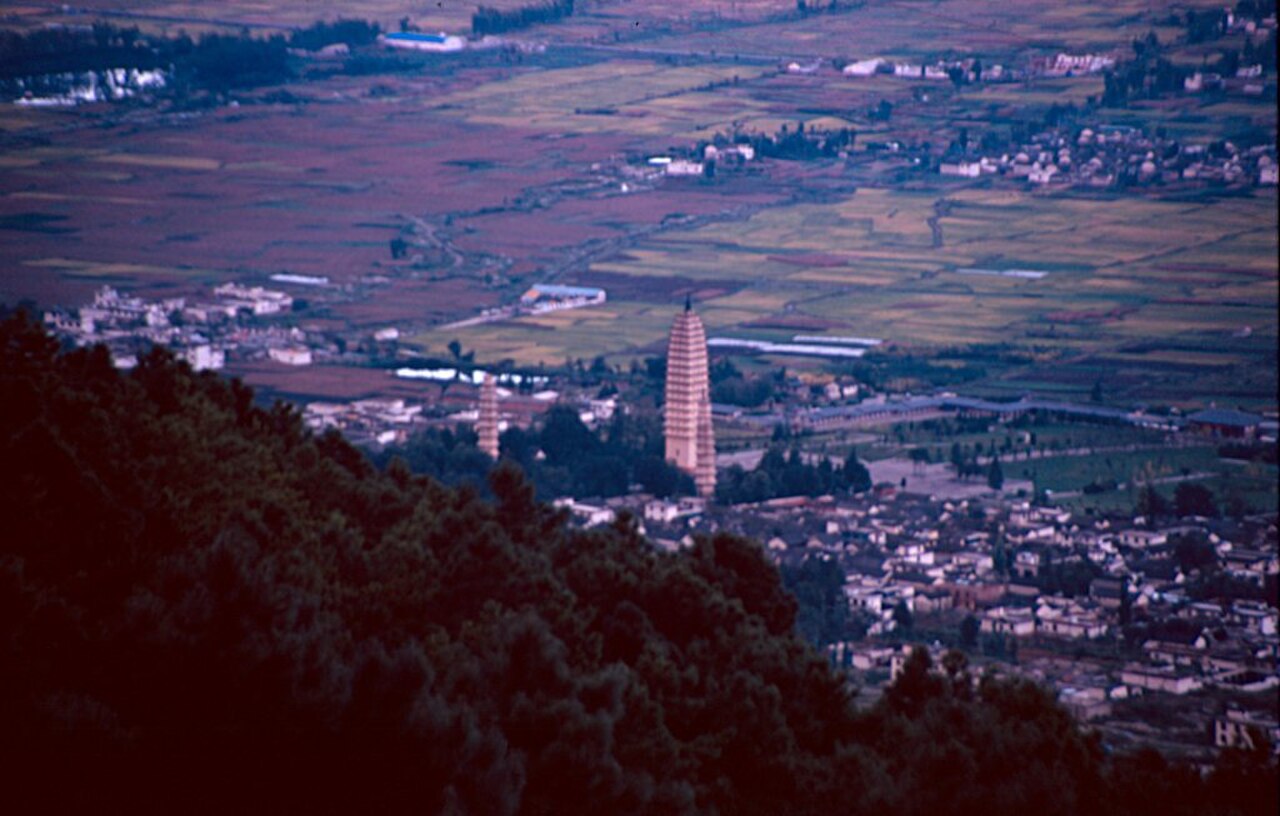
The Three Pagodas stand about 1.5 kilometres northwest of Dali Old Town, with Cangshan behind them and Erhai in front. Plan two to three hours: the pagodas and the reflection pool first, then the rebuilt Chongsheng Temple climbing the slope behind. The adult ticket is commonly listed at about 75 yuan, the Dali Tourist Express from the railway station or the old town's south and west gates stops at the entrance, and the best light comes early or after about 15:00. You cannot climb the pagodas. The central tower, Qianxun Pagoda, is a square brick pagoda of sixteen tiers of eaves, 69.13 metres high, built in the late Nanzhao period. Its two octagonal companions, each 42.19 metres, date from the Dali kingdom. For the rest of the three-day plan, see the Dali travel guide.
Why these three matter
Chongsheng was the great royal monastery of the Nanzhao and Dali kingdoms, the two states that ruled Yunnan from the eighth to the thirteenth centuries. The temple itself was lost long ago. The pagodas survived earthquakes and centuries of weather with repairs under the Ming and Qing. Between 1978 and 1981 they had a thorough restoration that brought them close to their historic form. The work opened chambers inside the towers and recovered a large cache of Buddhist relics: scriptures, statues and offerings. In 1961 the group was put on China's first list of Major Historical and Cultural Sites Protected at the National Level, and the surrounding cultural tourism zone is rated 5A.
Qianxun's tall, slightly tapering brick shaft looks very like the Small Wild Goose Pagoda in Xi'an, a reminder of how closely Nanzhao followed Tang models. The two smaller pagodas stand at equal distances to the north and south. They were added later, under the Dali kingdom.
Walking the site
The zone runs uphill along one axis, from the pagodas at the bottom to the temple halls near the top.
- The pagodas and the reflection pool. Take the mirrored "three pagodas" photograph first. It needs calm air, and the water is often stillest early in the day. If the surface is choppy, the dry view of the three towers against the mountain is still the right historic picture.
- The relic displays. Objects recovered during the 1978–1981 restoration are shown on site. Even a fifteen-minute look explains why the site is more than a photo stop.
- The rebuilt Chongsheng Temple. The halls behind were rebuilt in the 2000s on the old monastery's scale, rising in terraces toward Cangshan. They are new buildings, but the courtyards are quieter than the pool plaza and give you a sense of how large the royal temple was.
- The top terraces. If you keep climbing, the upper halls look back over the pagodas to Erhai. Allow close to an extra hour for the full climb and back.
Weekend mid-mornings are the busiest, with tour groups packed along the pool. Arrive at opening or after 15:00, when the light warms and the groups thin out. Morning light silhouettes the brick against Cangshan; afternoon light falls on the faces looking toward the lake.
Tickets and hours
The figures below are the commonly published 2025–2026 ones. Check the gate or the official ticket channel on the day.
- Adult admission: about 75 yuan at the gate, often a few yuan less online. Students pay roughly half.
- Electric shuttle cart inside the zone: about 25 yuan one way. Ticket-and-shuttle bundles at around 98 yuan appear on the big ticket apps.
- Hours: usually 07:30 to 18:30, with ticket sales ending around 18:20 and some seasonal shifts.
The cart is worth it in summer heat or if anyone in your group has limited mobility. Fit walkers can manage the main axis on foot. Passport holders who book online may need to swap the booking for a physical ticket at the window, so bring the passport you booked with and allow a few extra minutes.
Getting there
- Dali Tourist Express: from Dali railway station in Xiaguan via the old town's South Gate and West Gate to the Three Pagodas, flat fare 5 yuan, roughly every 15 minutes in the daytime (2024 timetable).
- Route 4: railway station to the Three Pagodas via Cangshan Road and Dafeng Road.
- Taxi from the old town: ten to fifteen minutes.
- On foot: possible from the north gate, though the road walk is dull.
The entrance faces National Highway 214, the old Dali–Lijiang road. Buses heading north toward Xizhou pass along it, and some travellers flag one down here. A pre-arranged driver is simpler if you want to string several stops together.
How it fits a day
There are two natural pairings:
- With the old town. Walk Dali Old Town in the morning, take the pagodas in the afternoon light, and be back inside the walls for dinner.
- The north road. Pagodas at opening, Xizhou for lunch and courtyards, then Butterfly Spring or Zhoucheng's tie-dye workshops in the afternoon.
Do not try to combine it with the long Ximatan cableway on Mount Cang in one morning unless you start very early and have checked that the cableway is open. Both are weather-dependent, and doing them back to back leaves no slack.
Frequently asked questions
Can you climb the Three Pagodas?
No. The historic pagodas are protected monuments and are viewed from outside only.
How long should I spend at the Three Pagodas?
Two to three hours for the pagodas, the reflection pool and the main temple halls. Close to four if you climb to the top terraces and read the relic displays.
Is the temple behind worth the walk?
Yes if you have the time. The halls are modern rebuilds, but the climb gives you views back over the pagodas to Erhai and quieter courtyards.
When is the best time for photographs?
Early morning for calm water in the reflection pool and fewer people, or late afternoon for warm light on the brick.