Mount Cang (Cangshan): Which Dali Cableway to Take
For most visitors Cangshan means a cableway ride, and the choice is between two lines. The Ximatan cableway is the long one, rising about 1,650 metres from just outside Dali Old Town to an alpine lake at roughly 3,900 metres. It is the one to take on a clear, calm day, but it costs the most and is the first to close in wind or ice. The Gantong cableway is short and cheap and stays mid-mountain: 65 yuan one way or 100 return at the government-approved 2025 fare. Take it when the summit is shut or when you want a gentler half day among temples and streams. Decide on the morning, from the weather and the operator's notice, not the night before. The rest of the Dali plan is in the Dali travel guide.
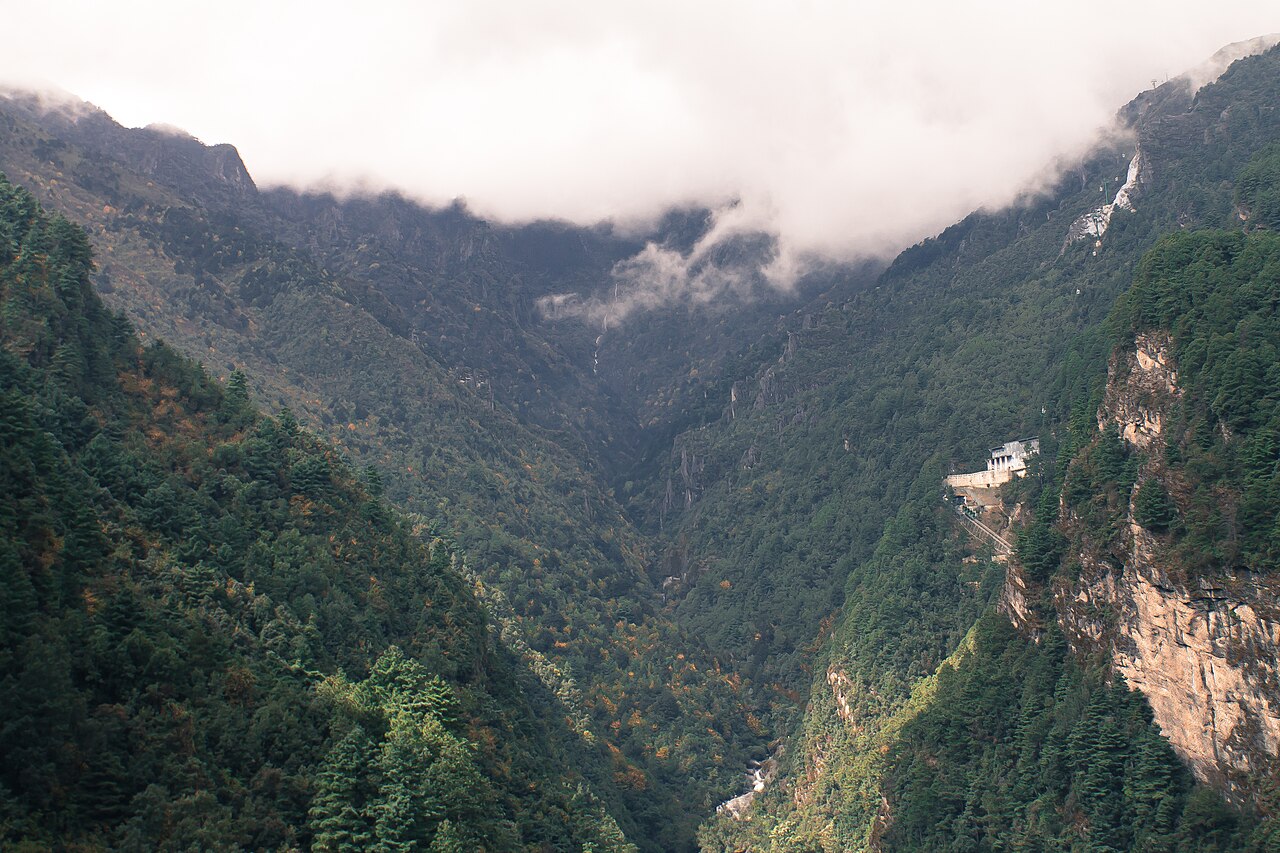
The mountain in brief
Cangshan, also called Diancang Mountain, is the wall of peaks on the west side of Erhai Lake, about 50 kilometres long and 20 kilometres wide. There are nineteen peaks, and between each pair a stream runs down to the lake, eighteen in all. The highest point, Malong Peak, reaches 4,122 metres. Snow along the crest in winter is the "Cangshan snow" of Dali's four classic scenes (wind, flowers, snow and moon). The range is a National Geopark. Seen from the old town it fills the whole western sky, which is why a clear morning in Dali makes people want to go up.
Ximatan cableway: the summit line
The Ximatan line opened in 2011. It runs about 5.5 kilometres in two sections:
- Lower station beside the Tianlong Babu film city, west of the old town, at about 2,200 metres.
- Middle station at the Qilongnü (Seven Dragon Maidens) Pools in the Heilong Stream valley, about 2,800 metres.
- Top station at Ximatan (Washing Horse Pool) on Yuju Peak, about 3,900 metres.
From the top station, boardwalks and stairs lead to the lake. Up there it is cold and windy, and the light is fierce. Published operating times from the Dali Tourism Group give uphill rides from 08:30 to 14:00 and downhill from 08:30 to 17:00. Upper sections close early or all day in strong wind, icing or lightning.
Fares are high and vary by season. 2025 listings gave a full round trip of 340 yuan in peak season and 280 yuan off-peak, and a half-way round trip to the middle station at 200 and 168 yuan, all including Cangshan scenic-area admission. Check the current price on the official channel. Packages that add the film city or the Three Pagodas are widely sold.
Plan four to six hours, including queues and the bus or cart to the lower station. Go up early, because wind usually picks up in the afternoon, and the 14:00 cut-off for uphill rides comes quickly if you start late.
Gantong cableway: the fallback that is a good day in itself
The Gantong line starts southwest of the old town, about 1.5 kilometres west of Guanyintang, and climbs around 2.6 kilometres in about twenty minutes to roughly 2,550 metres. That puts you among pine forest near Gantong Temple, close to the Qingbi Stream and the mid-mountain trail network. Under the Dali city price approval of July 2025, the ride costs 65 yuan one way or 100 yuan return. Children 1.2 metres and under ride free. Children between 1.2 and 1.4 metres pay 35 one way or 50 return, and active military, disabled visitors and seniors 70 and over get 20 percent off. Park admission and packages cost extra. Operating hours are usually around 08:30 to 16:30, weather permitting.
If you arrive at Ximatan and the upper section is closed, buy Gantong without waiting around in hope. You still get a mountain morning and wide views over Erhai.
Walking between the lines: the Yudai Road
About 11 kilometres of level, roughly two-metre-wide path, the Yudai (Jade Belt) Cloud Road, runs along the mountainside at mid-altitude. It links the Gantong cableway at the south end, the Qilongnü Pools at the Ximatan middle station, and Zhonghe Temple at the top of the Zhonghe cableway further north. A popular plan is to ride Ximatan to the middle station, walk part of the road, and come down another line. Check before you set off that your return line is running and that you can reach it before it closes.
Altitude, weather and kit
Dali's old town sits at about 1,976 metres. The Ximatan top station is nearly 2,000 metres higher. Mild altitude symptoms (headache, breathlessness) are common at the top. Walk slowly, drink water, skip a heavy night of drinking beforehand, and go down early if anyone feels unwell. The cableway is the way out. Rented oxygen canisters at the lower station are optional, not a cure.
By season:
- Winter (December to February): the clearest air and snow on the crest, and the most ice closures.
- Spring (March to May): rhododendrons on the higher slopes, mostly settled weather.
- Summer (July and August): the rainy season, with more cloud and the most lost views.
Whatever the month, take a wind shell and a warm layer, sunglasses, high-SPF sunscreen and gloves for cold rails. Coats can be rented at the bottom. Eat breakfast in town and carry water and a snack, because food at the top is limited.
Getting to the lower stations
Taxis and ride-hail cars from the old town take ten to twenty minutes to either lower station. Name the station clearly in Chinese: 洗马潭索道 for Ximatan, 感通索道 for Gantong. Some guesthouses arrange cableway transfers. If you are coming from Xiaguan, Gantong is the closer of the two.
Frequently asked questions
Ximatan or Gantong?
Ximatan for the summit and the widest views on a clear, calm day. Gantong when the upper line is closed, when cloud is low, or when you want a cheaper, easier half day.
Is Mount Cang worth a full day?
On a clear day, yes, with Ximatan. In heavy cloud, shorten it to Gantong or swap the day for Xizhou and the west shore of Erhai.
Can I combine Cangshan with the Three Pagodas?
Only with an early start and a confirmed cableway. Usually it is better to put the Three Pagodas with the old town on another day.
What if the weather is bad all week?
Put the time into Erhai Lake, a night in Shuanglang and a slower day in Dali Old Town.