Baoguo Temple, Ningbo: the Oldest Timber Hall South of the Yangtze
Baoguo Temple sits halfway up Lingshan in Jiangbei District, about fifteen kilometres from the city. The monastery is traced by legend to the Eastern Han, Emperor Xizong of Tang is said to have granted the name Baoguo, and the hall standing today was rebuilt in 1013, the sixth year of Northern Song Dazhong Xiangfu — among the oldest timber structures left south of the Yangtze. No Buddhas and no monks: it opens as the Baoguo Temple Ancient Architecture Museum. This one is for travelers who want to look at the wood itself; figures checked against public sources retrieved in September 2026.
What the temple holds
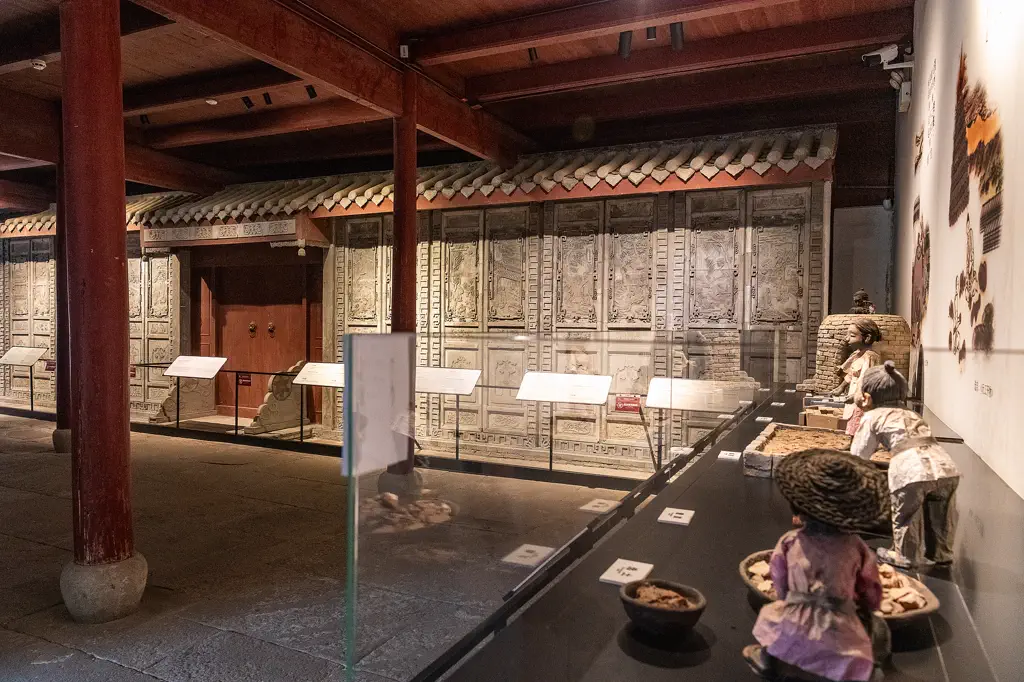
The hall is the whole point. It predates the Yingzao Fashi — the Song building manual — by ninety years, and its methods match the book's, which makes it a standing reference for Song timber construction. The melon-ribbed columns, small sections laminated into a full column — the finest built in four joined segments — are among the earliest known examples of the technique, and the stacked bracket sets overhead read better in person than in any drawing.
The museum spreads its story across four halls — the Heavenly Kings Hall, the Great Buddha Hall, the Guanyin Hall and the Sutra Library all carry exhibits, bracket models to old members — so the panels can carry you even if the beams cannot. The collection runs to more than seven hundred items, old members to models, enough to take a Song hall apart in front of you.
The hall also carries an old saying — birds do not enter, insects do not gnaw, spiders do not spin — boastful, but pointing at the timber selection and the ventilation built into the structure. Stand in front and look up before deciding what to believe.
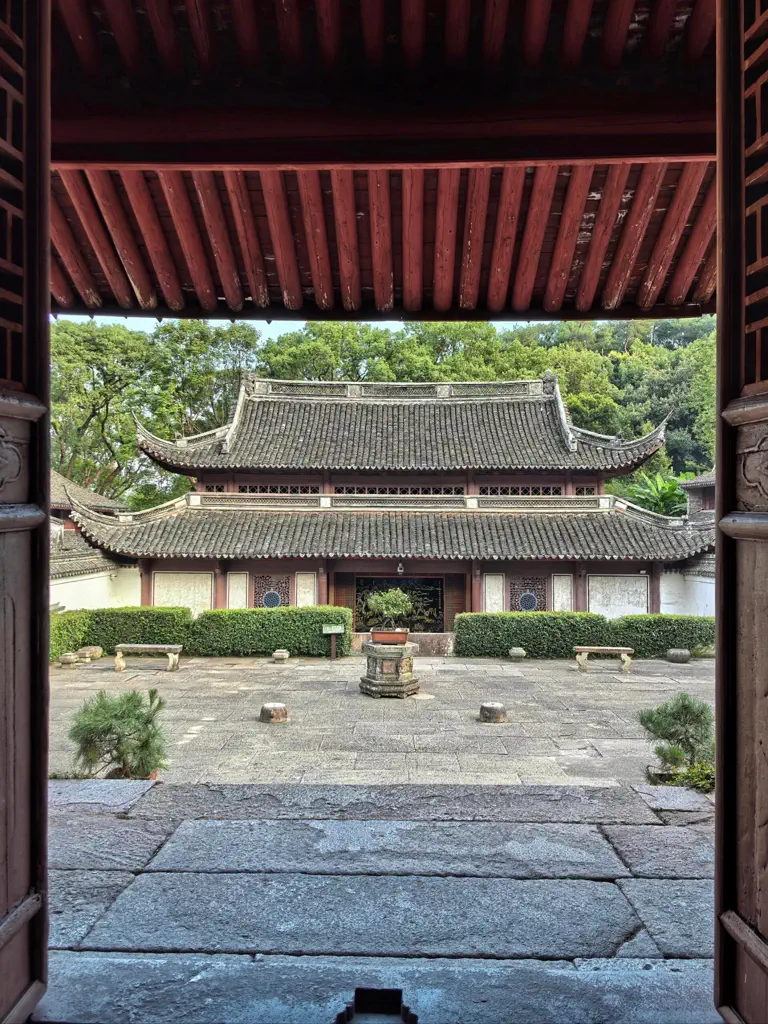
The climb through the gate is part of the visit: dense trees, cicadas in summer, a cooler belt of air, more than twenty hectares of forest around the temple. The patience this path asks for is the second thing the ticket buys, and the better one. The courtyard is quiet — stand a while under the eaves before entering, let your eyes adjust, and the hall gives back more.
How the hall survived
The site is traced to an Eastern Han hermitage; a temple rose in the Tang and the revival came in the Northern Song, with the Emperor Xizong naming story attached. The present hall was rebuilt in 1013, and later repairs never reset its frame, which is why Song practice survives in place. In 1961 it entered the first batch of nationally protected sites, the same list as the Forbidden City. Damp Jiangnan is hard on timber for a thousand years; the credit, locals say, goes to the wood and the detailing.
Then the conversion went further. The incense stopped, the monks left, and the ancient architecture museum took over, no Buddhas in the hall. Visitors come for the building, not for prayer — and that is a gift. A courtyard without incense is clean and quiet, the timber watchers can take their time, nobody hurries anybody.
Tickets, hours and transport
| Item | Reference |
|---|---|
| Ticket | 20 yuan full, 10 yuan concession; concession rules per posted notice |
| Hours | 8:00–17:00, entry stops 16:30; winter hours per official notice |
| Address | Anshan village, Hongtang subdistrict, Jiangbei District, on Lingshan |
| Bus | route 332 to Baoguo Temple stop; or 330 then 338 |
| Time | 2–3 hours |
The 20-yuan figure comes from Bendibao and TripAdvisor; a Baike museum entry says free, so confirm on the day.
How to plan it
Route 332 runs to the gate both ways. Do not rush the mountain path — it is the first half of the visit, dense and loud with cicadas, one thin layer of sweat by the top. Give the hall an hour: beams, brackets and ribbed columns all reward getting close. Down the hill the city returns quickly, and Tianyi Pavilion or Moon Lake chains on well. Driving, Yucai Road runs straight north; on the bus, mind the 332 timetable and the last departure.
The Ningbo guide gives it half a day; Xuedou Mountain and its waterfall are another day entirely.
Things to confirm before you go
- Ticket figures put the full price at 20 yuan and the concession at 10; one museum listing says free, so check the day's price at the gate.
- Hours run 8:00 to 17:00 with entry stopping at 16:30 on the summer schedule; the winter schedule is posted separately.
- Bus 332 is the direct line and its timetable is sparse — check the last departure before committing to a late afternoon.
- Steps run all the way up the approach; strollers will not manage.
Frequently asked questions
How is Baoguo different from other temples?
It is an architecture museum now — no monks, no incense. The sight is the 1013 hall and Song practice. Prayer pilgrims will be disappointed; timber fans will not.
Worth it if I do not know architecture?
Yes. The age alone holds the hall up, and the hills are quiet. Read the entrance panels first and the beams start talking.
Easy with children or elders?
Steps all the way — strollers will not manage; elders are fine at a slow pace. The hall is dim with sloping floors, so watch your feet. Buses are infrequent; leave slack for the timetable.