Xuedou Mountain: Waterfalls, Pools and the Giant Maitreya at Xikou
Xuedou Mountain is the scenery half of the Xikou scenic area in Fenghua, west of Ningbo — a temple mountain with a gorge of three pools, two named waterfalls and the largest open-air seated Maitreya bronze in the world. It suits travelers who have done the libraries and rivers of Ningbo and want one full day of walking and water instead. The way the site works is one-way and kind to the knees: a shuttle bus lifts you to the top of the gorge, you walk down through the pools, a sightseeing train and a cable car carry you back up to Miaogao Terrace, and the day ends at the falls and the temple below.
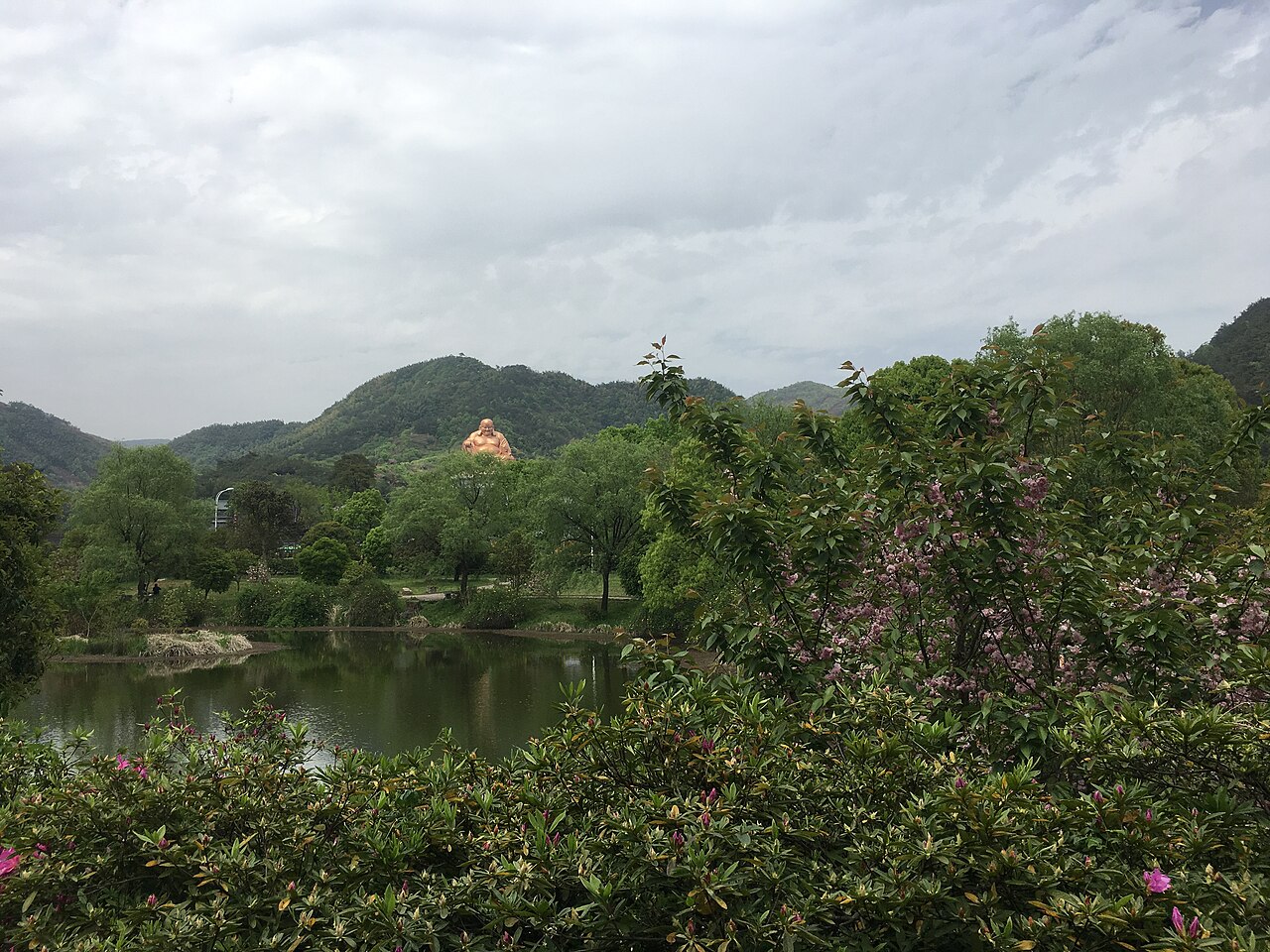
What kind of mountain this is
The name is a piece of Song-dynasty field observation: on the Milk Peak a spring ran white as milk from a rock opening, so the spring was called Milk Spring and the opening Snow Sinus — Xuedou — and the mountain took its name from the opening. The ridge rises to about 800 metres, the highest of the spur that runs off the Siming range, and the "First Mountain of the Siming" over the entrance is Chiang Kai-shek's own calligraphy.
The protections are old. The mountain entered the third batch of nationally key scenic areas in 1994, and on April 18, 2010 the joint Xikou–Tengtou scenic area, of which it is the core, was rated 5A, the top national class; the joint area covers about 45.5 square kilometres. Its Buddhist standing is newer and louder. Xuedou Temple is the dojo of Maitreya, and the mountain is now promoted as the fifth sacred Buddhist mountain beside Wutai, Emei, Jiuhua and Putuo — an idea the modernist monk Taixu first floated here in 1933. In October 2024 the Sixth World Buddhist Forum met on the mountain, with delegates from more than seventy countries, and closed with a declaration signed in its name.
Getting there, tickets and hours
Coaches leave the south coach station beside Ningbo railway station for Xikou through the day — the ride is about 30 kilometres — and a taxi or ride-hail car does the trip in roughly an hour. From the Xikou bus stop, a local bus or the scenic-area shuttle takes you to the mountain visitor center, where the park shuttles start. Those shuttles climb to the Sanyin transfer stop at the top of the gorge; recent listings put the first summer departure at 8:15 and the last at about 15:30, earlier in winter, so the mountain rewards an early start.
Gate listings in recent years put the Xuedou Mountain ticket, round-trip park shuttle included, somewhere between 120 and 150 yuan; the sightseeing train and cable car on the middle section are ticketed separately at about 50 yuan for the pair; and combination tickets that add the Chiang family sites in Xikou town, or the Tengtou eco-village, cost more still. The numbers differ between listings and seasons, so treat them as stale until you check the day's official notice. Opening hours run roughly 8:15 to 17:00 in summer and 8:45 to 16:30 in winter, with the last downhill shuttles in the middle of the afternoon.
The route down the mountain
Sanyin Pools
The Three Hidden Pools are a gorge on the mountain's west side, about 1,600 metres long, dropping some 550 metres in a chain of three pools — the upper one dark and steep, the middle one clear, the lower one sudden. Stone steps run down beside the water, and after rain the gorge is at its best and its slipperiest. This is the walking heart of the mountain; give it an hour and a half and good shoes.
The little train and the cable car
At the foot of the gorge a small sightseeing train and then a cable car carry you back up toward Miaogao Terrace — about 50 yuan for the two rides on recent listings, extra queues on holidays. The pair can be skipped on foot, but the path is long and climbs; most people pay.
Miaogao Terrace
Miaogao Terrace is a ledge at 396 metres on a spur that juts out with cliffs on three sides and a deep valley below — a view platform before the word existed. In 1927, after his first retirement from politics, Chiang Kai-shek pulled down a small temple on the spot and built himself a villa of about 436 square metres, cutting the door plaque "Miaogao Terrace" in his own hand. He stayed here on every return home, and in 1949 the house served as his headquarters while he directed the last months of the civil war from his hometown.
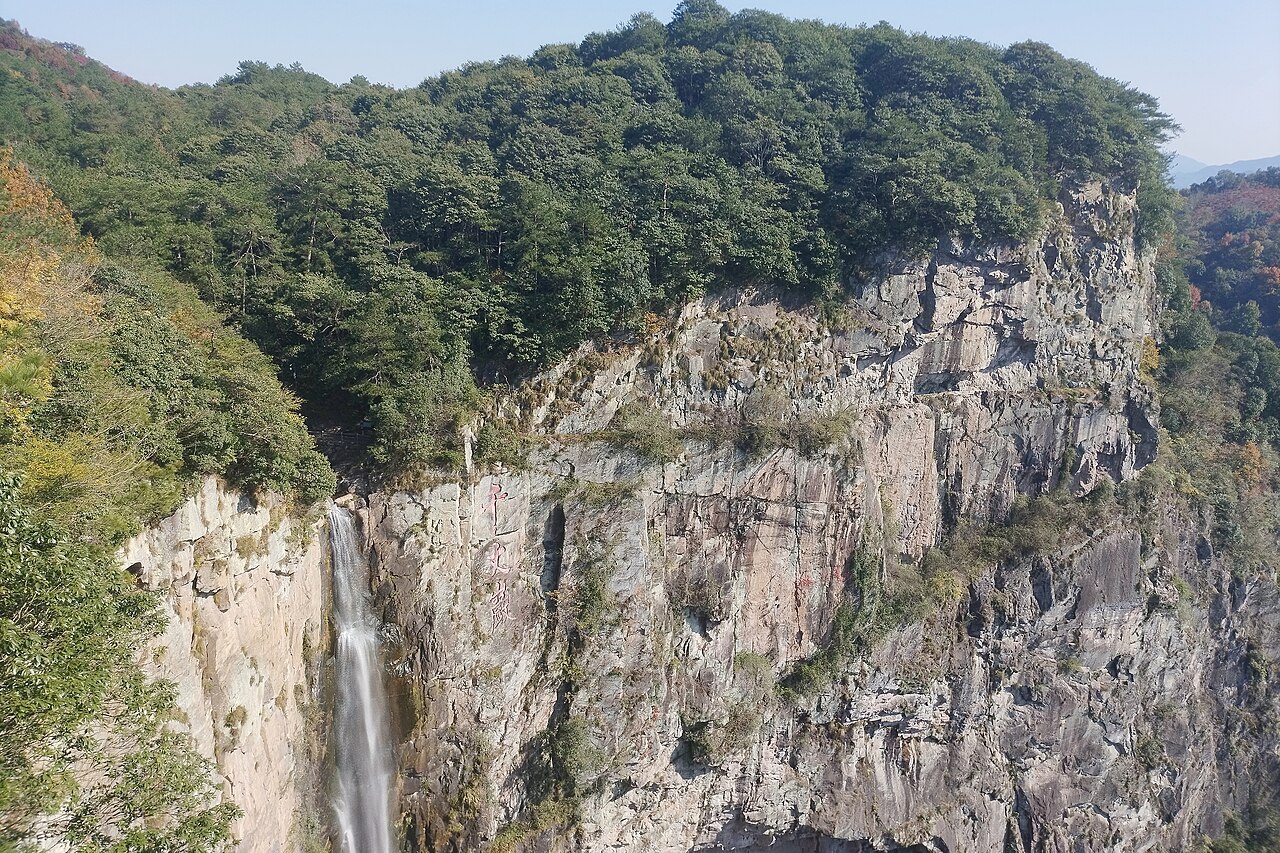
Qianzhangyan Falls
The water that goes over Qianzhangyan comes from the two valleys on either side of Xuedou Temple; the streams join at Fulong Bridge in front of the temple and then drop 186 metres off the cliff in a single throw, breaking on a ledge into two sections. The Northern Song emperor Zhenzong named it the "East Zhe Waterfall," and the Feixue — Flying Snow — Pavilion below has always been the place to watch it, because the spray does look like snow: the same white that gave the mountain its name. You see the lip of the falls from the Miaogao side and the full height from the pavilion on the valley floor.
Xuedou Temple and the Great Maitreya
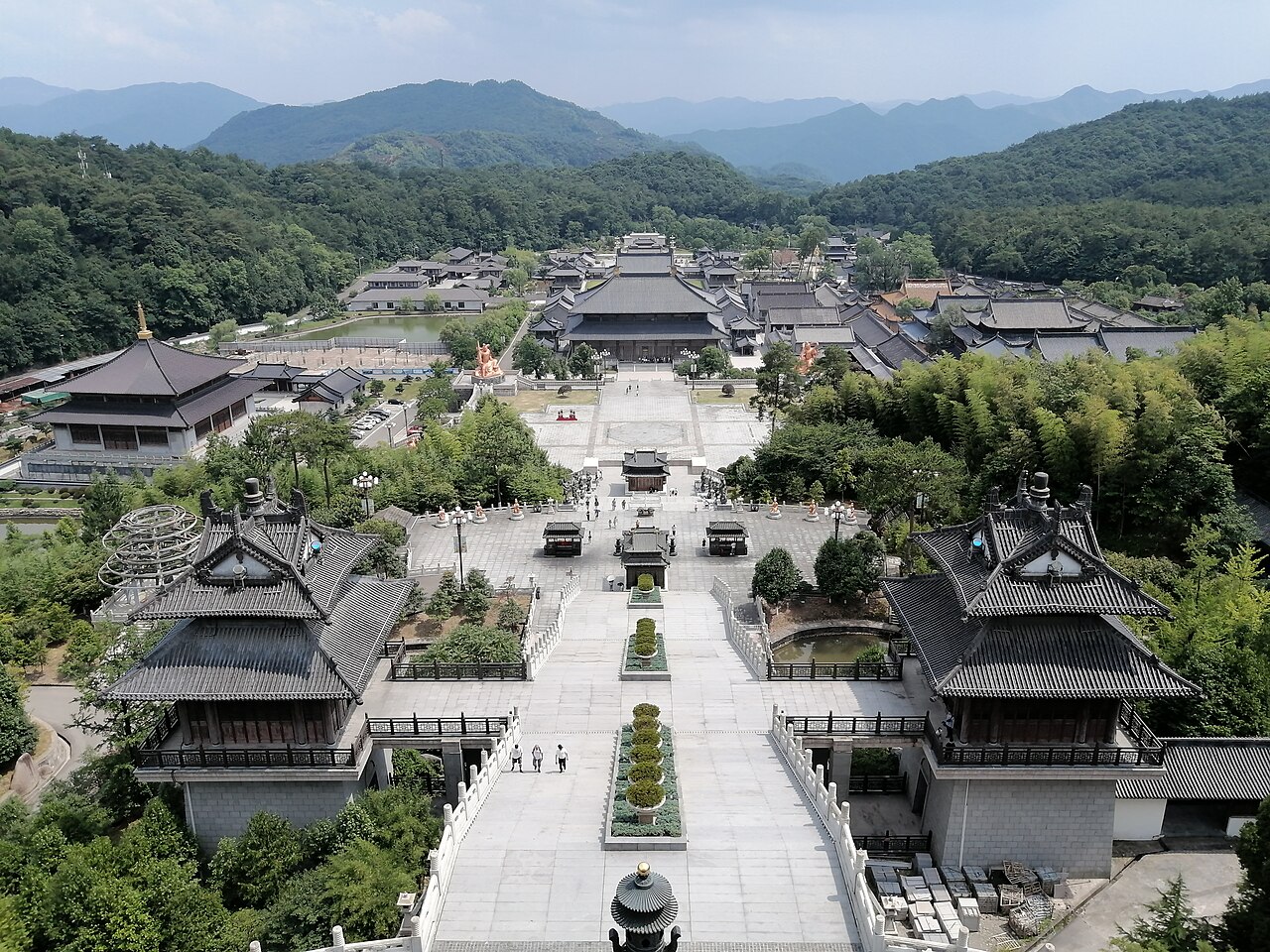
A temple has stood here since the Jin dynasty, when it was called Waterfall Abbey; in 892 it became a Chan monastery, in 992 it received the imperial name Zisheng Chan Temple of Xuedou, and in the Song it was counted among the ten great Chan monasteries of the realm. In 1037 Emperor Renzong was said to have toured the mountain in a dream, and the court honored it as "the mountain seen in a dream." Its Buddhist specialty came from a Fenghua monk: the fat, laughing Budai, remembered in this district, was recognized as Maitreya in person, and the mountain became Maitreya's dojo.
The temple you walk now is largely a modern rebuilding, but the statue behind it is the reason many visitors come. Approved in 2005 and consecrated on November 8, 2008, the open-air bronze Maitreya rises 56.74 metres in total — a 33-metre figure on a 9-metre lotus seat and its pedestal — cast in the image of Budai, and it is the tallest seated open-air bronze Maitreya yet made. In the temple grounds two nanmu trees survive that Zhang Xueliang planted; after the Xi'an Incident he was held, from January 1937, in the China Travel Service lodge beside the temple, the first stop of half a century in custody. The lodge burned after a kitchen fire that autumn; the 1988 rebuilding is now a small exhibition about him.
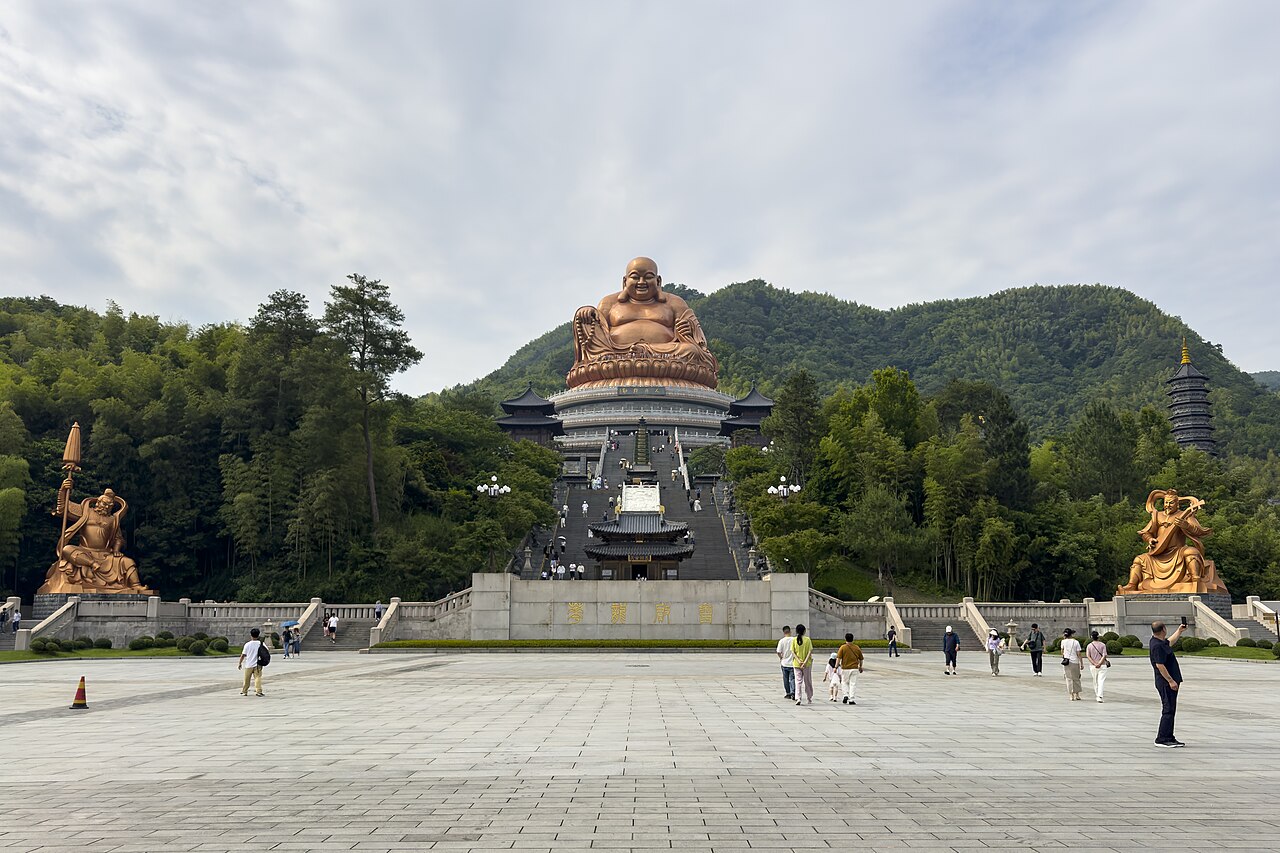
Xufuyan: the second waterfall
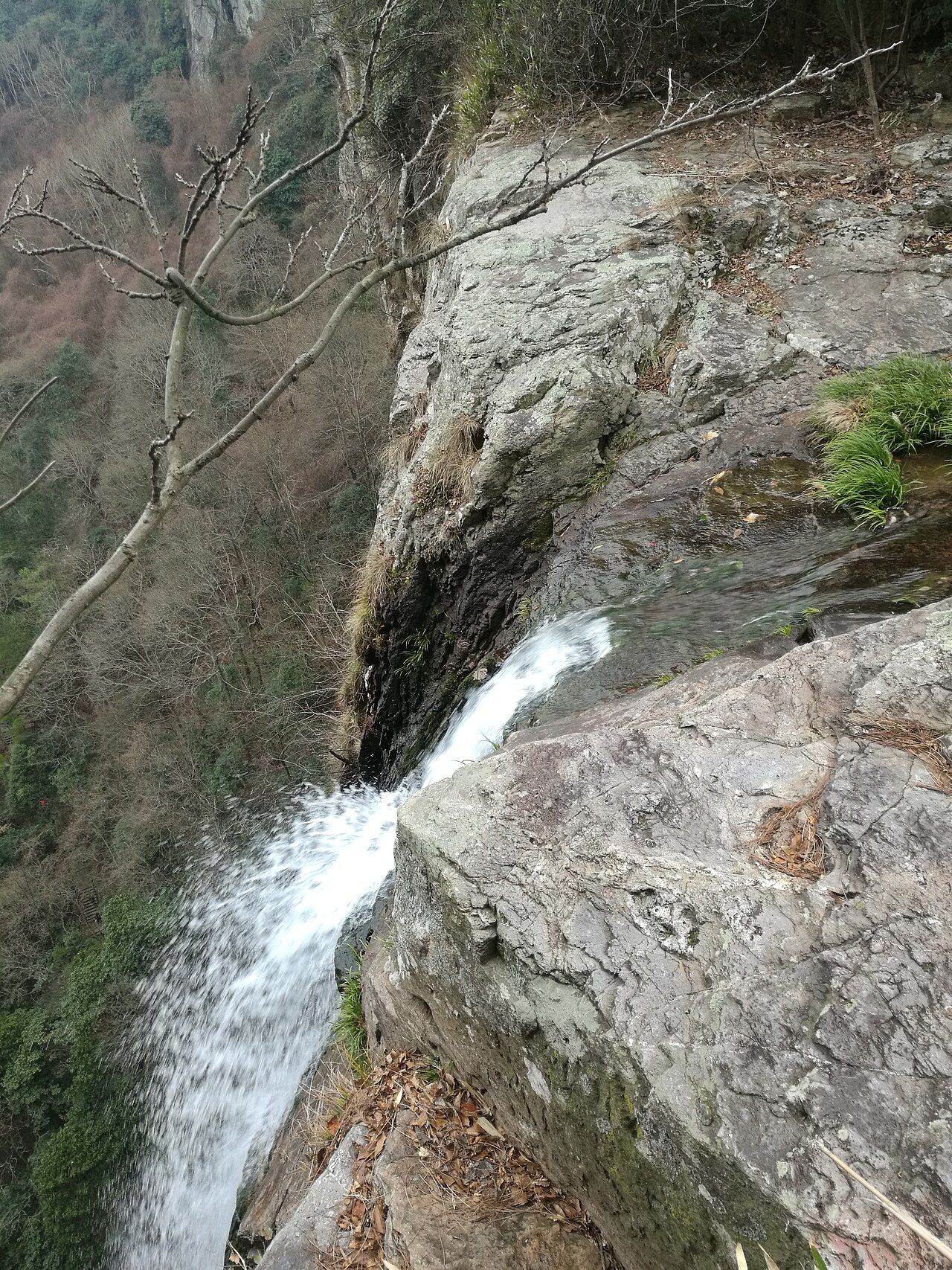
Seven and a half kilometres northwest of the temple, the Xufuyan cliff throws down a second waterfall of about 242 metres — billed as the tallest in East China — with its rock top at 476 metres. The site takes its own shuttle transfer from the Sanyin stop, and it has grown amusements: the Lingyundu glass walkway, opened in May 2018, runs some 200 metres above the valley along the cliff beside the falls, and via-ferrata routes and a zip line share the valley. The walkway is a separate ticket; check the day's notice before promising it to children.
Eating in Xikou
Xikou's own snacks are the thousand-layer pancake, a crisp baked flatbread sold in paper packets all over town, salty bamboo shoots in the style called sheep-tail shoots, and Fenghua's taro heads and water peaches in their seasons. For the city's table — lard tangyuan, yellow croaker with potherb mustard — the Ningbo guide has the fuller list.
How to arrange the day
Take the first shuttle up and walk the gorge while it is cool: Sanyin Pools in the morning, the train and cable car before the queues thicken, Miaogao Terrace and the falls lip around midday, the pavilion and the temple after lunch, the statue last, when the sun moves behind it. That is three to five hours on the mountain. With energy left, spend the late afternoon on the Chiang family residences along Xikou's main street; otherwise the coaches run back to Ningbo in time for dinner by the river. On a second day, the city sights — Tianyi Pavilion, the Old Bund, Baoguo Temple — complete the pair.
Things to confirm before you go
- Ticket figures differ between listings — roughly 120 to 150 yuan for the mountain with shuttles, about 50 yuan more for the train and cable car, extra for Xufuyan's walkway; all of it changes, so check the official notice for the day.
- Shuttle timetables are seasonal: the last bus up runs mid-afternoon in summer and early afternoon in winter, and the last buses down leave before closing.
- Typhoons and plum rains can close mountain paths in late summer; after heavy rain the gorge steps are slick.
- The glass walkway, via ferrata and zip line at Xufuyan have their own tickets and height limits.
- Holiday weekends queue for the cable car; start early or walk.
Frequently asked questions
How do I get to Xuedou Mountain from Ningbo?
By coach from the south coach station beside the railway station, then a local bus or shuttle up to the mountain visitor center — about an hour and a half all told — or by taxi in about an hour. Driving yourself is easy on the expressway.
How many hours does Xuedou Mountain take?
Three to five hours for the gorge, terrace and falls without the temple; a full day once you add the temple, the statue and Xikou town. Half a day is possible if you skip Sanyin Pools and ride up, but the pools are the best of it.
Is the cable car included in the ticket?
No. The mountain ticket covers entry and the park shuttles; the sightseeing train and cable car in the middle section are a separate charge — about 50 yuan for the pair on recent listings — and the Xufuyan amusements are separate again.
Can I combine Xuedou Mountain with other Zhejiang cities?
Yes, and the rail lines make it simple. Shaoxing is the canal-and-Lu-Xun city an hour west on the way to Hangzhou, and Hangzhou sits at the head of the bay with West Lake and the high-speed interchange. A common loop is Hangzhou, Shaoxing, Ningbo and the mountain, then the coast.