Moon Lake, Ningbo: the Thousand-Year Lake Beside Tianyi Pavilion
Ningbo has called this water Moon Lake for a thousand years. It sits in the old city's southwest, Tianyi Pavilion on its west bank a few minutes' walk away, and its surface breaks into islets whose names — Liuting, Fangcao Isle, Chrysanthemum Isle — have been in use since the Song. In 2018 the lake and the library were listed together as the Tianyi Pavilion and Moon Lake Scenic Area, rated 5A; the lake half is free and open all day. This one is for travelers pairing the two in a day, and everything below was checked against public sources retrieved in September 2026.
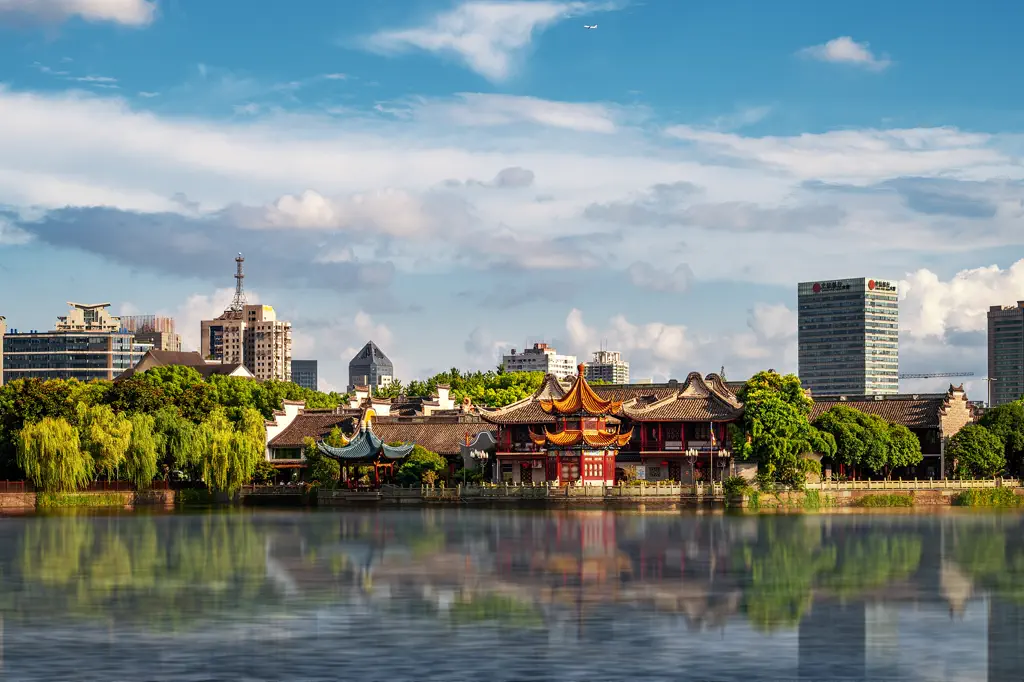
What the lake is for
The lake's byname is the Zou-Lu of East Zhejiang, a claim to scholarship rather than scenery — though the scenery holds up. On Liuting, the mid-lake islet, stands the He Mijian Shrine to He Zhizhang, the Tang poet who served as imperial calligrapher-secretary, the office behind the name. On the east bank around Chrysanthemum Isle lies the Goryeo Embassy Site: from 1074, the seventh year of Song Xining, Ningbo received envoys from Goryeo here, and this lodge is the built witness of that exchange, one of the few things of its kind the city can put hands on.
The scenery is the quiet kind. The lake is small and its banks run into the old city's living quarters — walking here feels like strolling past somebody's front door, a different rhythm from a ticketed gate. The lakeside path is flat, pavilions and stone bridges following the water, locals practicing tai chi in the morning, lamps coming on for an easy evening loop, benches everywhere. Boats run most days — weekdays they finish earlier, weekends half an hour later; the dock's posted notice is the authority.
A few small museums sit around the shore, most walk-in. Yintaidi, a Qing official's residence turned museum, has ticket listings that disagree between platforms, so check on the day; drop in if passing, no detour needed.
How the lake took shape
Moon Lake began as a reservoir, dug in the Tang dynasty; Song records already call it West Lake. Older notes have it that the Tang city kept two lakes, Sun and Moon; the Sun one is gone and the Moon one stayed. In 1078, the first year of Song Yuanfeng, Zeng Gong — governor of Mingzhou, as Ningbo was then named — dredged the lake, the islets accumulated, and the ten-isle layout was complete in the Yuanyou years. Under the Shaoxing era of the Southern Song, pavilions and seasonal planting went up along the banks and the ten isles grew famous; the scholars and officials who settled around the water left Ningbo its scholarly reputation. Seasonal planting along the banks goes back to the same era — the scenery's first draft was drawn by Song hands.
In October 2018 the lake and the library were merged as one scenic area, one of the first nine 5A listings granted after the Ministry of Culture and Tourism was founded. Neighbor and library had kept company for four hundred years; they now share one sign.
Half the isle names still work as waymarks: Bamboo Isle, Moon Isle and Chrysanthemum Isle on the east, Liuting across the middle, Fangcao and Xue to the sides. The buildings on them have been rebuilt several times over; the names stayed and became the map. Walk those names and Liuting ties the north and south halves of the lake together, old buildings sitting right by the bridges and water.
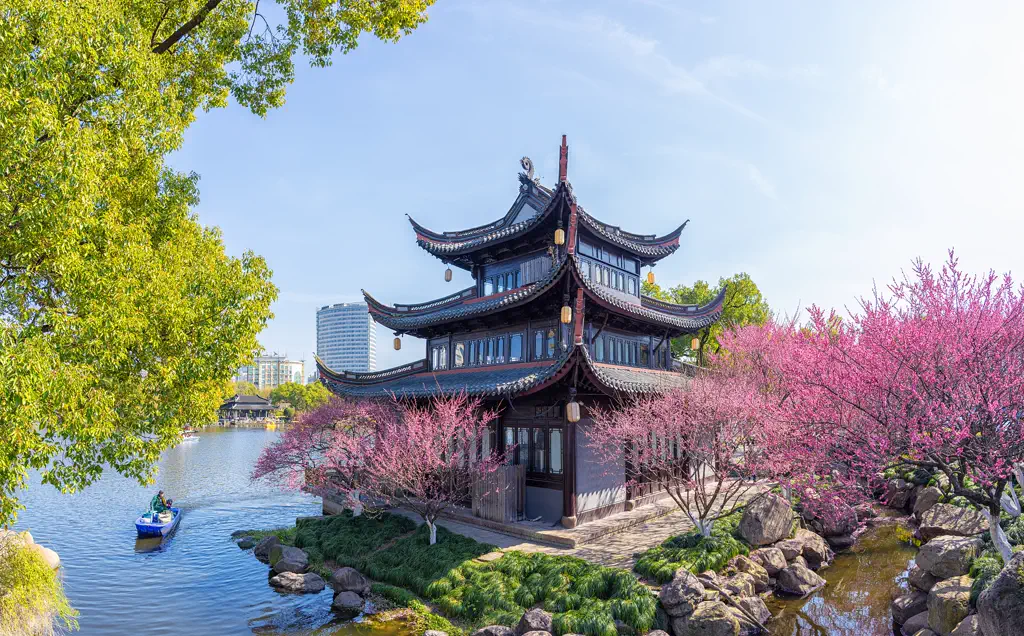
Tickets, hours and transport
| Item | Reference |
|---|---|
| Ticket | lake free; a few indoor exhibits may charge or require registration |
| Hours | park open all day; buildings keep seasonal posted hours |
| Boats | weekdays 8:30–16:30, weekends to 17:00 |
| Address | Zhenming Road area, Haishu District, east of Tianyi Pavilion |
| Metro | Line 2 Chenghuangmiao station exit A, or Gulou station, then walk |
| Time | 1–2 hours |
The lake and Tianyi Pavilion Museum are separate ticket systems. Yintaidi's price is unconfirmed between platforms and sits on the to-confirm list.
How to fit it into a day
Pair it with Tianyi Pavilion: the pavilion in the morning, lunch, then out the west gate straight onto the lake — the shrine and the embassy site both fall on the walking line north from Liuting. Dinner ten minutes on foot around the City God Temple, and if the night is still young, two metro stops to the Old Bund.
With a day and a half or more, split the lake in two: the east-bank sites in the morning, Liuting at dusk — the same water behaves differently under two lights.
Longer itineraries are in the Ningbo guide, and Xuedou Mountain to the west has its own day.
Things to confirm before you go
- The lake is free; Tianyi Pavilion Museum charges 30 yuan next door — separate ticket systems.
- Boat hours run weekdays to 16:30 and weekends to 17:00 on recent listings, weather permitting; the dock board rules.
- A few indoor exhibits inside the park may charge or check ID, and Yintaidi's price differs between platforms.
Frequently asked questions
Does Moon Lake charge admission?
No. The lake is free, all day. Tianyi Pavilion Museum charges 30 yuan next door — neighbors, separate systems. One or two small exhibits inside the park may charge or check ID.
Can the lake and Tianyi Pavilion share one day?
Comfortably. Two to three hours for the pavilion, an hour or two for the lake, lunch in between; the two connect on foot. Tight on energy, keep the lake for the evening — it walks off dinner well.
When is Moon Lake at its best?
Early morning and dusk. Mornings belong to locals; after the lamps come on the loop is at its easiest. On rainy days the lake fogs over like an ink painting — mind the wet stone.