East Lake: A Quarry That Learned to Be a Lake
East Lake lies at Gaobu, east of Yuecheng—a quarry that became a lake. The hill was once Ruoshan; from the Han, stonecutters took qingshi here, and in the Sui Yang Su cut deeper to build the city wall. By the late Qing, half the hill was gone and cliffs dropped into water. Tao Junxuan then banked a long dike after the Peach Blossom Spring—river outside, lake inside—and named it East Lake because it sat east of town. Shaoxing pages group it with Hangzhou's West Lake and Jiaxing's South Lake as Zhejiang's three famous lakes; it is a national 4A site. A boat is the point of coming. City pacing is in the Shaoxing guide.
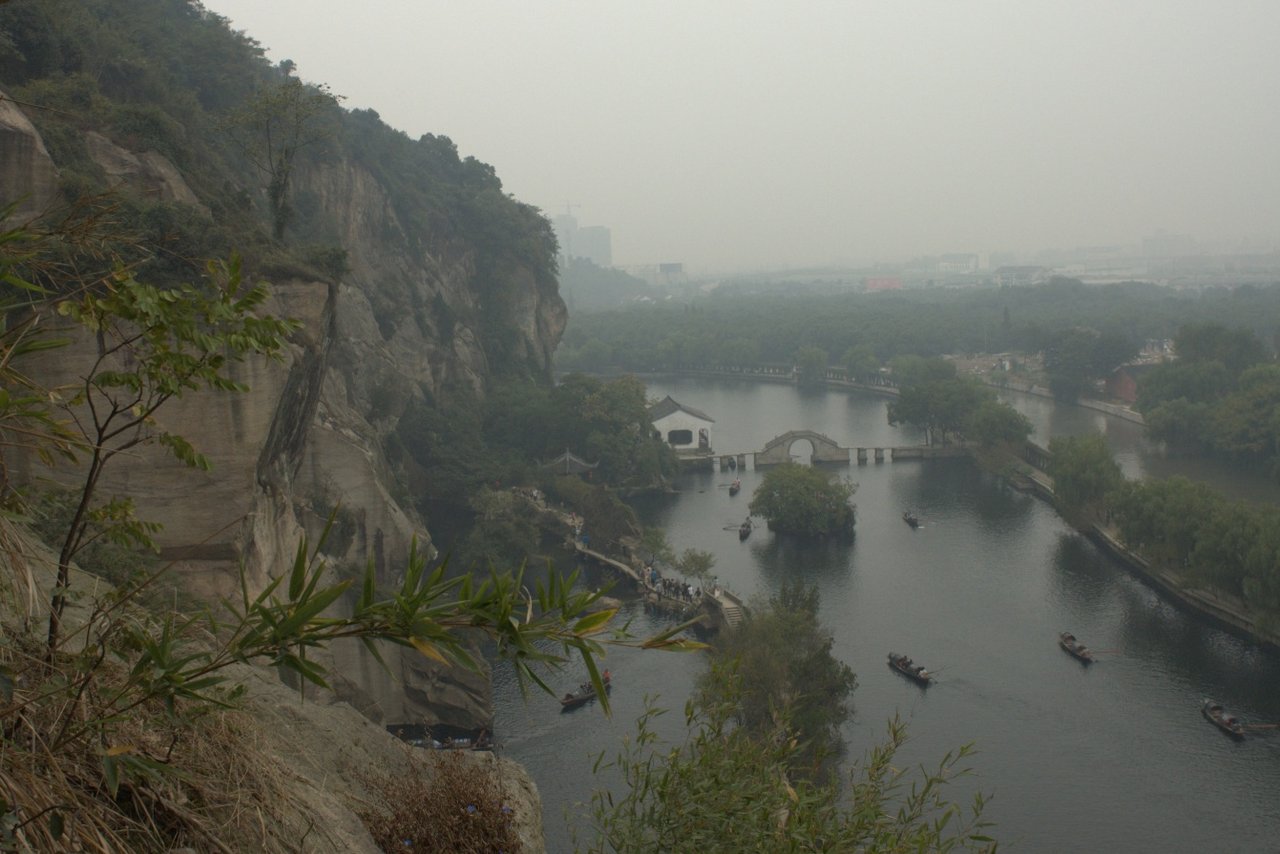
Boats, caves and damp stone
Bridges cross the water; small wupeng boats go into Peach Cave, Horn Cave and Tao's Cave. Pavilions line the shore, and Tao Society on the west remembers Tao Chengzhang. Caves are damp—wear shoes that can take moisture and mind your head. Tickets follow official notices; boat fees may be separate from entry. Confirm on the day rather than trusting a year-old blog price. This page does not invent yuan amounts.
Morning light on the cliffs is often kinder than harsh midday glare. Plum rains and typhoons can erase a countryside day; keep East Lake movable in summer. The city guide's day two puts East Lake in the morning and Yu Mausoleum in the afternoon.
Not Hangzhou's West Lake
Hangzhou's West Lake is open lake-and-hill country. Shaoxing's East Lake is quarry drama—vertical cut faces, narrow water, black-awning boats. Comparing "which lake is bigger" misses the point. Come for stone and boat, not for a causeway marathon.
Things to confirm before you go
- Entry and boat ticket rules per official notice.
- Weather and wind; caves close or feel unsafe in storms.
- Transport from Yuecheng hotels to Gaobu and onward to Yu Mausoleum.
- Dry bag for phones in splashy cave mouths.
- Time buffer before the afternoon mausoleum visit.
Shore manners
Stay seated when boatmen ask. Do not stand suddenly under low cave roofs. Pack out rubbish; do not carve names into cliff faces that already record industrial history. Drones may be restricted over boats—ask staff.
Quick decisions
Must I boat?
Yes if you came for East Lake; shore photos alone miss the caves.
Morning or afternoon?
Morning pairs cleanly with Yu Mausoleum after lunch.
Same day as Orchid Pavilion?
Only on a two-day squeeze; the three-day plan splits east and west.
What else?
Yu Mausoleum the same afternoon; keep town literary stops for day one.
Why the cliffs look cut
Every vertical face is a reminder that Shaoxing built walls and cities from this stone. The lake is industrial history flooded into beauty—Tao Junxuan's dike finished the transformation with a literary name. Knowing that story stops visitors from calling the cliffs "natural karst" they are not. Peach Cave and sister caves are quarried hollows entered by boat; expect echoes, drips and low clearances.
If someone in your group dislikes enclosed damp spaces, arrange a shore wait while others take a short cave loop. Boatmen know the rhythm; tip and thanks follow local custom without drama. After disembarking, walk a bridge or two so the moon-arch silhouettes join the cliff photos.
Lunch before Yu Mausoleum
Gaobu snacks or a return toward town both work; avoid heavy drinking before the Kuaiji slope. Keep the afternoon timed so temple gates are not closing as you arrive. East Lake plus Yu is the eastern pair—protect both when you have three days.
Photography without delaying boats
Cliff reflections want stillness; boat schedules want motion. Take wide shots from shore, then board. Inside caves, skip flash if signs ban it—use higher ISO and steady hands. The misty ink-wash look on overcast days is a feature of Jiangnan weather, not a failed sunny postcard.
Zhejiang's three lakes framing
Grouping East Lake with Hangzhou West Lake and Jiaxing South Lake is provincial tourism language, not a claim that the three feel identical. Use it only as a hint that Zhejiang prizes named lakes with cultural essays attached. Shaoxing's entry in that triad is the quarry-boat story. Spend your energy on cliffs and caves, then travel to Hangzhou another day for causeways—not the same afternoon. Ningbo waits east if the wider Zhejiang loop continues after Yuecheng wine.
After the boat
Change damp socks if caves soaked them; Kuaiji paths feel longer in wet shoes. A short tea near Gaobu resets the group before the mausoleum hire. If boats are cancelled for wind, walk bridges and cliff bases and still keep Yu for the afternoon—East Lake without caves is thinner but not empty. Rebook a boat morning later in the trip only if the calendar still has air.