Yu Mausoleum: Memory of Yu on Kuaiji Mountain
The Mausoleum of Yu the Great stands at Yuling village, about eight kilometres southeast of town, on the west-facing slope of Kuaiji Mountain—a memorial tomb for Yu, founder of Xia. Tradition says Qi built a shrine here; the temple to the northeast, a palace-style compound, dates its founding to the early Liang of the Southern Dynasties. The site was listed in the fourth batch of nationally protected sites in 1996. Walk the shrine, the temple and the stele; do not treat the present halls as ancient fabric. City pacing is in the Shaoxing guide.
Rebuild honesty
The Cultural Revolution wrecked the statue and much of the temple; Zhou Jianren, then in the provincial revolutionary committee, is credited with stopping the temple's total demolition, and repairs ran from 1976 into 1981. The offering hall was rebuilt in 2007–2008. Knowing that timeline prevents the false expectation of untouched Liang timber. You are visiting a living memorial landscape repaired in public view.
The Goulou stele and doubt
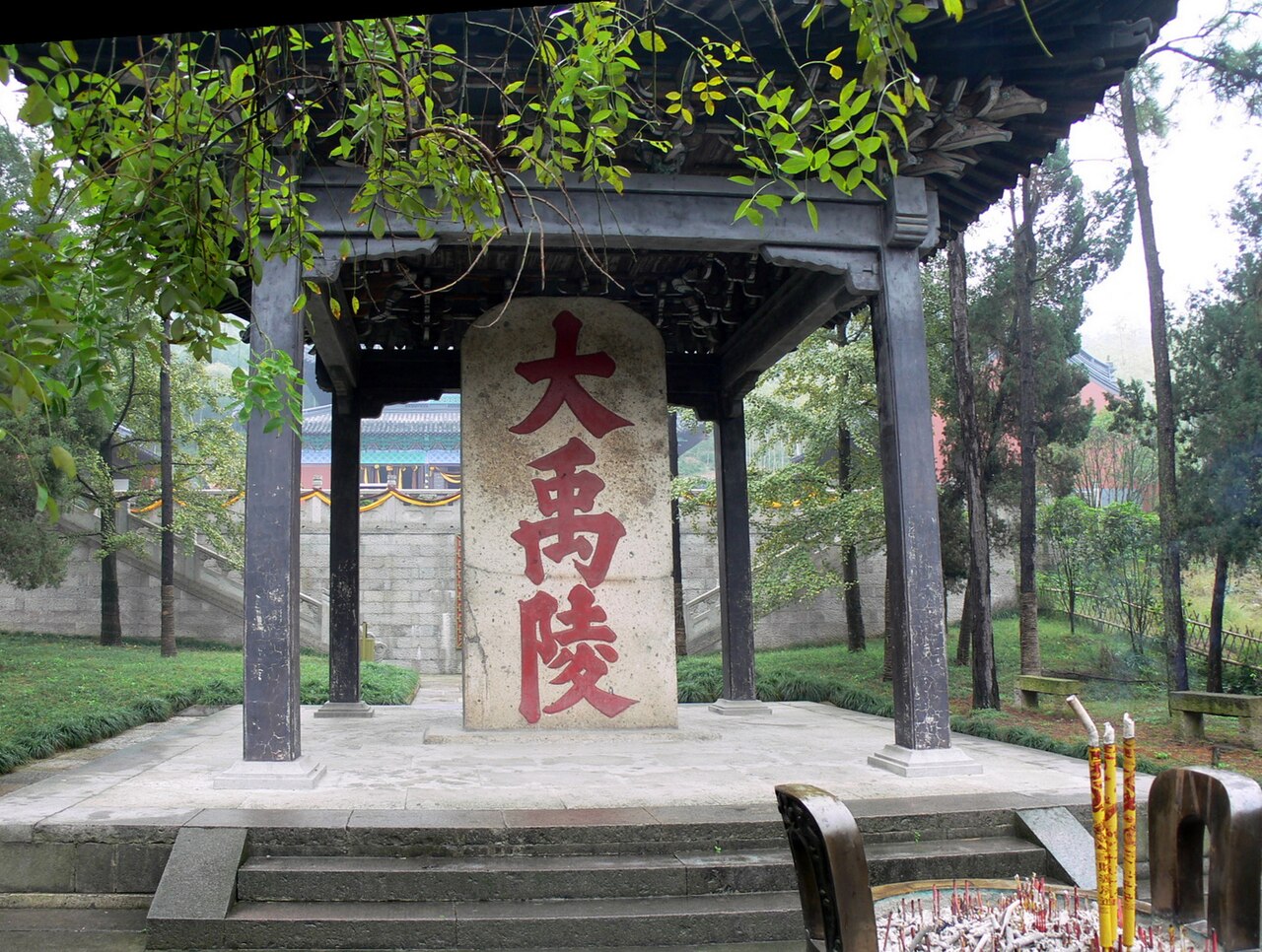
The Goulou stele's seventy-seven tadpole characters are locally tied to Yu; other scholars doubt a Xia king would have written in that script so far from the Yellow River. The city guide records the doubt—keep it. Read the stele as a powerful local tradition and a scholarly argument, not as settled proof. The pavilion photograph of the "Mausoleum of Yu the Great" stele is the visual landmark most visitors remember.
Eastern day with East Lake
Day two: East Lake morning boat, Yu Mausoleum afternoon. About eight kilometres southeast after Gaobu makes a clean hire-car or taxi pair. With only two days, Yu is a possible cut if you keep East Lake plus Orchid Pavilion instead. Tickets and hours follow official notices.
Things to confirm before you go
- Opening hours and ticket channel.
- Transport from East Lake or from Yuecheng.
- Modest dress and quiet in shrine spaces.
- Water for the slope walk in summer.
- How late you can start after a damp morning boat.
Etiquette
This is a memorial to a culture-hero king. Keep voices low, stay off offerings, and follow no-climb signs on stele bases. Do not invent rituals for photos. Incense and tour flags both appear—share space.
Quick decisions
Temple first or stele first?
Follow the site flow; both matter. The stele pavilion is the clearest photo landmark.
Skip if short on time?
Yes—cut Yu before East Lake if the eastern day must shrink.
Same day as Keyan?
No. West and southeast fight the clock.
What else?
East Lake morning; town wine at night; western pair another day.
Myth, kingship and Zhejiang ground
Yu controlling the floods is shared Chinese cultural memory; placing his mausoleum on Kuaiji ties Zhejiang's landscape to that mythic founding. Visitors from the Yellow River plain sometimes expect Xia archaeology that this memorial never claimed to be. Take the site as shrine and stele tradition on a wooded slope. The palace-style temple compound stages reverence; the stele pavilion stages inscription culture; together they make a coherent afternoon after East Lake's secular quarry beauty.
School groups appear on weekdays. Yield on stairs. If fog wraps Kuaiji, the atmosphere thrills photographers and slows pavement—leave extra minutes. Repairs from the late 1970s onward are not a footnote; they are why halls stand for you to enter.
Closing an eastern day
Return to Yuecheng for yellow wine and simple dishes. Tomorrow's western pair needs rested feet. Travellers who add night markets after Yu should keep walks short; three days in Shaoxing reward pacing more than midnight checklists.
Pairing honesty
Yu Mausoleum is quieter than Lu Xun street and less photogenic than East Lake cliffs for some travellers. It earns its slot as meaning, not as spectacle. If your group only wants boats and wine, cut Yu first among the six stops—the guide already allows that on a two-day map.
From boat spray to shrine quiet
The mood shift from East Lake's damp caves to Yu's wooded memorial is intentional in the three-day design. Let clothes dry, eat something simple, then enter the mausoleum area ready for slower steps. If rain follows you from Gaobu, covered temple walks still work better than another open boat. The stele pavilion remains photogenic in grey weather. End the eastern day without adding a forced night show—Shaoxing rewards early sleep before the western calligraphy and quarry pair.
Offerings and modern pilgrims
Some visitors bring flowers or incense; follow posted rules and never leave plastic waste on the slope. Photography of people praying needs consent. The site works as quiet civic memory for Zhejiang as much as as a checklist stamp—leave a little slower than you arrived, then ride back toward yellow wine without rushing a sixth sight into the night.