Orchid Pavilion: The Afternoon That Made a Preface
The Orchid Pavilion stands at the foot of Lanzhu Hill, about 13 kilometres southwest of town—the garden address of Wang Xizhi, Kuaiji's administrator in the Eastern Jin. On the third day of the third lunar month in Yonghe 9 (353), Wang and more than forty men held a purification gathering here; the Preface to the Orchid Pavilion Collection came out of that afternoon. Goujian is said to have planted orchids on the spot; a Han post station gave the name. The present site was rebuilt in Jiajing 27 (1548) by prefect Shen Qi and altered later. It entered the seventh batch of nationally protected sites in 2013. Allow a half day from Yuecheng. City sequencing is in the Shaoxing guide.
What you actually walk
Goose Pond, the Winding Stream Pavilion, the Right Army Shrine and a run of later copies of the preface sit in the same park. The buildings are Ming–Qing restorations, not Jin fabric—the city guide says so plainly. Come for calligraphy history and garden ritual, not for untouched 4th-century timber. Tickets and hours follow official notices.
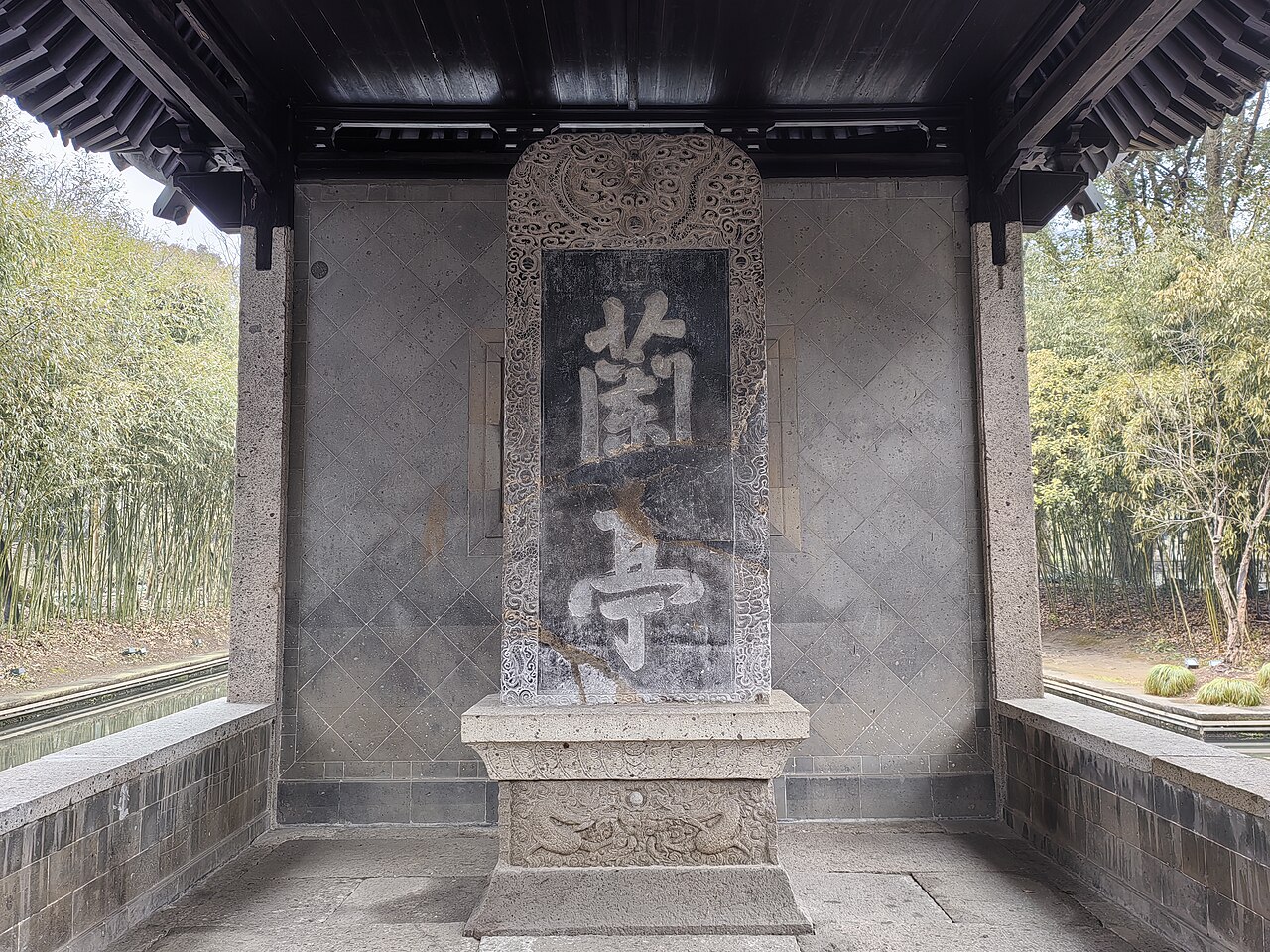
The Kangxi "Lanting" stele was smashed into four pieces in the Cultural Revolution and pieced back with the last stroke of lan and the first of ting gone. That scar is part of the visit's honesty. Photograph respectfully; do not rub steles.
Western day with Keyan
Day three in the guide heads west: Keyan in the morning, Orchid Pavilion in the afternoon. The two share a countryside transport block about eight to thirteen kilometres west of town. With only two days, keep Lu Xun and Shen Garden, then spend day two on East Lake plus the Orchid Pavilion, dropping Keyan or Yu. Plum rains and typhoons can take out a countryside day—keep this half-day movable in summer.
Calligraphy travellers versus city travellers
If you came for the preface, this is non-negotiable. If you came for canals, wine and Lu Xun, the street wins when you must cut. They are not substitutes. Bring a translation of the preface on your phone if you do not read classical Chinese; standing at Goose Pond with the text open changes the stop from "nice garden" to "this is the afternoon."
Things to confirm before you go
- Transport time from hotel to Lanzhu Hill and return.
- Ticket hours; whether Keyan shares the same hire car.
- Weather for outdoor steles and ponds.
- Modest behaviour around shrine spaces.
- Water and shade in July heat.
Courtesy among steles and streams
Do not paddle in Goose Pond. Keep bags off carved surfaces. Tour groups cluster at famous tablets—wait rather than push. The winding-stream drinking game is history, not a prompt to pour wine into heritage water features.
Quick decisions
Half day or full day?
Half day from town is the design; linger longer only if calligraphy is your trip's core.
With Keyan same day?
Yes on the western day when the calendar allows.
Instead of Lu Xun?
Only if the preface is why you came; otherwise keep the street.
What else?
East Lake belongs on the eastern day with Yu Mausoleum.
Copies, forgeries and why the site still matters
The original preface manuscript is a legendary absence; what fills museums and this park are generations of copies and stele traditions. Standing among those layers is the point. Wang Xizhi's afternoon became a calligraphy curriculum; Lanting is where the curriculum touches ground in Kuaiji memory. You do not need to judge brush authenticity on site—leave that to specialists—and still feel why scholars kept rebuilding the garden address.
Bring mosquito repellent in warm months near ponds. Stone steps can be slick after rain. Hire drivers often combine Keyan and Lanting; agree the order and wait time before leaving town so you are not rushed past Goose Pond.
Pairing with Hangzhou
High-speed rail puts Hangzhou about an hour away. Usual order is Hangzhou lake first, Shaoxing canals and Lu Xun second; calligraphy fans sometimes reverse to protect Lanting energy. Either works if tickets and legs agree. Do not attempt West Lake and Orchid Pavilion as a same-day sprint from one hotel bag.
Festival timing
The lunar third-day third-month purification date still draws calligraphy events in some years. Confirm calendars if you want ceremony atmosphere; expect crowds. Ordinary weekdays reward slower stele reading. Either way, the preface's fame does not require a festival ticket—only transport and attention.
Stele hall patience
Kangxi's broken-and-mended tablet is a conservation parable as much as a calligraphy trophy. Look for the missing stroke ends without treating the scar as damage to complain about. Later copies nearby show how the preface multiplied through stone. Teachers sometimes sketch characters in notebooks—give them room. Your half day succeeds when Goose Pond, one major stele and the winding-stream pavilion each get unhurried minutes rather than a checklist sprint past every corridor.