Liyuan: A Republican-Era Garden on Li Lake
Liyuan sits on the north shore of Li Lake in Binhu District, a national 4A scenic area of 8.2 hectares, 3.5 of them water. The lake takes its name from Fan Li, the Yue minister said to have boated here with Xi Shi after the fall of Wu. In the early Republic the village of Qingqi laid out eight scenes along the shore. Between 1927 and 1936 Wang Yuqing and his son built Liyuan on that base, and Chen Meifang built a "Fishing Village" to the west. The two gardens were joined in 1952 by a long corridor of about 200 metres. It is the afternoon of the lake day in the Wuxi plan.
The Fan Li story
Fan Li helped King Goujian of Yue defeat Wu, then is said to have left court and drifted off on the lakes with Xi Shi. Whether or not they ever passed here, the legend gave Li Lake its name and gives the garden its romance. Read it as local tradition, which is how the sources treat it.
What you walk
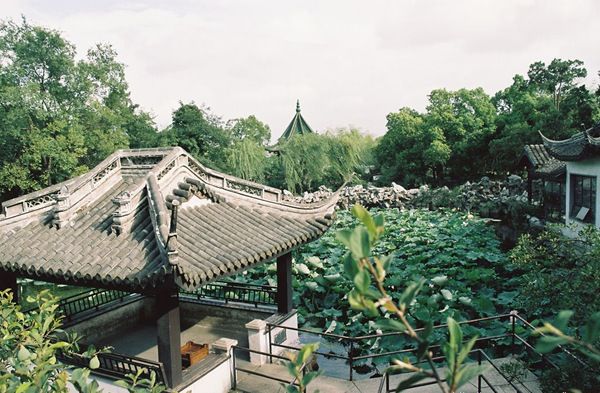
The Four Seasons Pavilions, built in 1954, are the usual photograph. Each is planted for a season: plum, oleander, osmanthus and wintersweet. Whatever month you visit, one of them should be at its best. On the east side, a waterside corridor of 289 metres runs along the lake with a small pagoda nearby. Walking it gives the easiest sense of how the garden leans on water rather than walls.
Liyuan is a twentieth-century garden that borrows classical forms, with rockeries, corridors and pavilions, but it is more open to the lake than Suzhou's enclosed gardens. Treat it as a Republican-era lakeside retreat rather than a Ming survivor. It was listed as a Jiangsu protected site in 2002.
Pairing with Yuantouzhu
Liyuan is closer to town than Yuantouzhu, so the guide puts it in the afternoon on the way back from the Turtle Head point. After a morning of open lake views, Liyuan's smaller scale and corridors are a gentle change. One to two hours is enough. If rain cancels the Yuantouzhu morning, Liyuan alone still makes a short, pleasant lake visit.
Tickets and hours
Liyuan is a paid site, and hours follow official notices. This page does not quote yuan amounts. Weekend afternoons can be busy with local families; weekdays are quieter.
Light and seasons
Late afternoon light on the water flatters the pavilions and the corridor. Spring brings plum and fresh willow; summer is humid with heavy rain possible; autumn osmanthus scents the paths; winter is quiet, with wintersweet in the matching pavilion. Mosquitoes find the waterside in warm months, so repellent helps.
Getting there
Liyuan sits in Binhu District on the city side of the lake. Buses and taxis link it with Yuantouzhu and the centre. Check current routes on a local map app rather than relying on old bus numbers.
Things to confirm before you go
- Opening hours and ticket per official notice.
- Transport from Yuantouzhu or your hotel.
- Weather, since the corridor is exposed along the lake.
- Which Four Seasons pavilion is in bloom for your month.
- Dinner plans back in town afterward.
Courtesy
Stay off rockeries and planted beds. Keep children back from lake edges without railings. Share the pavilion viewpoints and move on after photos. Do not feed fish or birds unless signs allow it.
How it fits with Wuxi's gardens
Jichang Garden is the Ming garden at Huishan, built around borrowed mountain views. Liyuan is the Republican garden on the lake. Seeing both shows two centuries of Wuxi taste, and neither takes more than a couple of hours.
Quick decisions
How long?
One to two hours.
Liyuan or Jichang if only one garden?
Jichang for classical Ming design; Liyuan for a relaxed lake walk.
Same day as Lingshan?
Possible, but the guide pairs it with Yuantouzhu.
What next?
Dinner in town; spare ribs or a Taihu "three whites" lake dish.
A short walking route
Enter and head first for the Four Seasons Pavilions, then follow the shore east onto the long waterside corridor toward the small pagoda. Double back through the rockery paths of the older Wang garden, and finish on the joining corridor toward the former Fishing Village side. That loop covers the main sights without retracing too much ground. Sit for a few minutes on the corridor; the lake views are the point, and the garden is small enough that you will not run out of time.
Why a twentieth-century garden is worth it
Some travellers skip Liyuan because it is not ancient. That misses what it shows: how wealthy Wuxi families of the 1920s and 1930s used classical garden language on an open lakeshore. It is a useful bridge between the Ming design of Jichang and the modern city around it.