Huishan Ancient Town: A Street of Ancestors Below the Hill
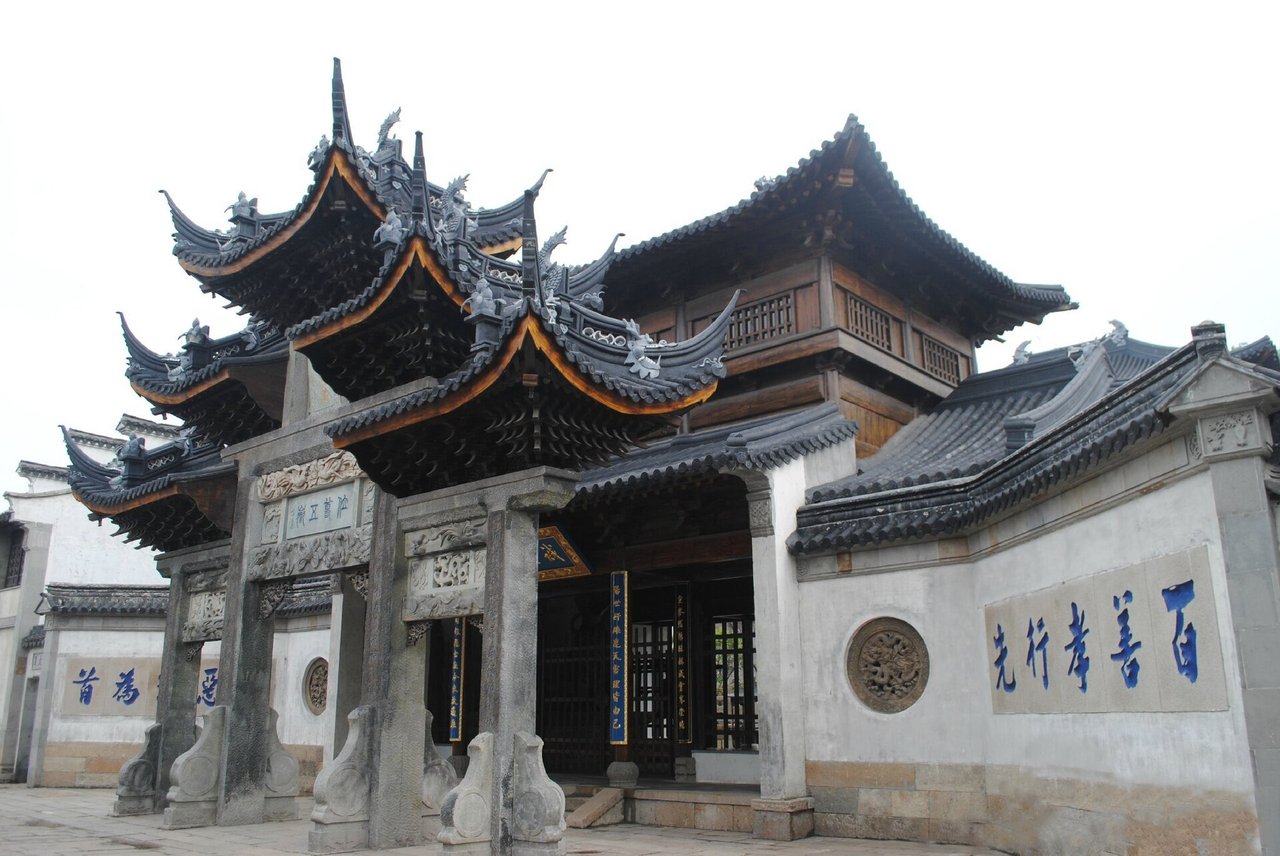
Huishan Ancient Town sits on the northeastern foot of Huishan in Liangxi District, on the west side of Wuxi. The name is a little misleading. It was never a market town in the usual sense. It is a dense cluster of ancestral shrines, built by Wuxi families and admirers of famous men from the Tang to the Republic, and Chinese Wikipedia counts 118 of them before 1949. The shrines line two streets that lead to Huishan Temple, the Second Spring Under Heaven and Jichang Garden. The streets are free and open at all hours. The temple, the spring and the garden form a paid heritage zone.
How a shrine town grew
Chinese Wikipedia traces the cluster to a Tang temple for Lord Chunshen, the Warring States noble who once held this region as a fief. Over the following centuries Wuxi families built shrines to their ancestors close to the sacred hill and to Huishan Temple, the leading Buddhist house of the city, founded in the Southern and Northern Dynasties. Some shrines honour gods, such as the Dongyue Emperor of Mount Tai and a set of small shrines to the spirits of tea, dreams, earth, water, war and insects. Others honour national figures, among them the Wuyue king Qian Liu, the Song statesmen Fan Zhongyan and Sima Guang, the philosopher Zhou Dunyi and the Ming minister Yu Qian. Many honour local worthies, including the Tang poet Li Shen, author of the famous short poem on the toil of farmers, the painter Ni Zan, and the Donglin scholars Gu Xiancheng and Gao Panlong.
The town also sits on water. A branch of the old Grand Canal, the Longtou River, comes right up to the foot of the hill, and Chinese Wikipedia says Huizhou merchants settled here for the canal trade and built shrines of their own, including one to Zhu Xi that served as a Huizhou guild hall. That is why some gateways here have the tall, stepped walls of southern Anhui next to the white walls and black tiles of Jiangnan. A few later shrines mix in Western details.
The two streets
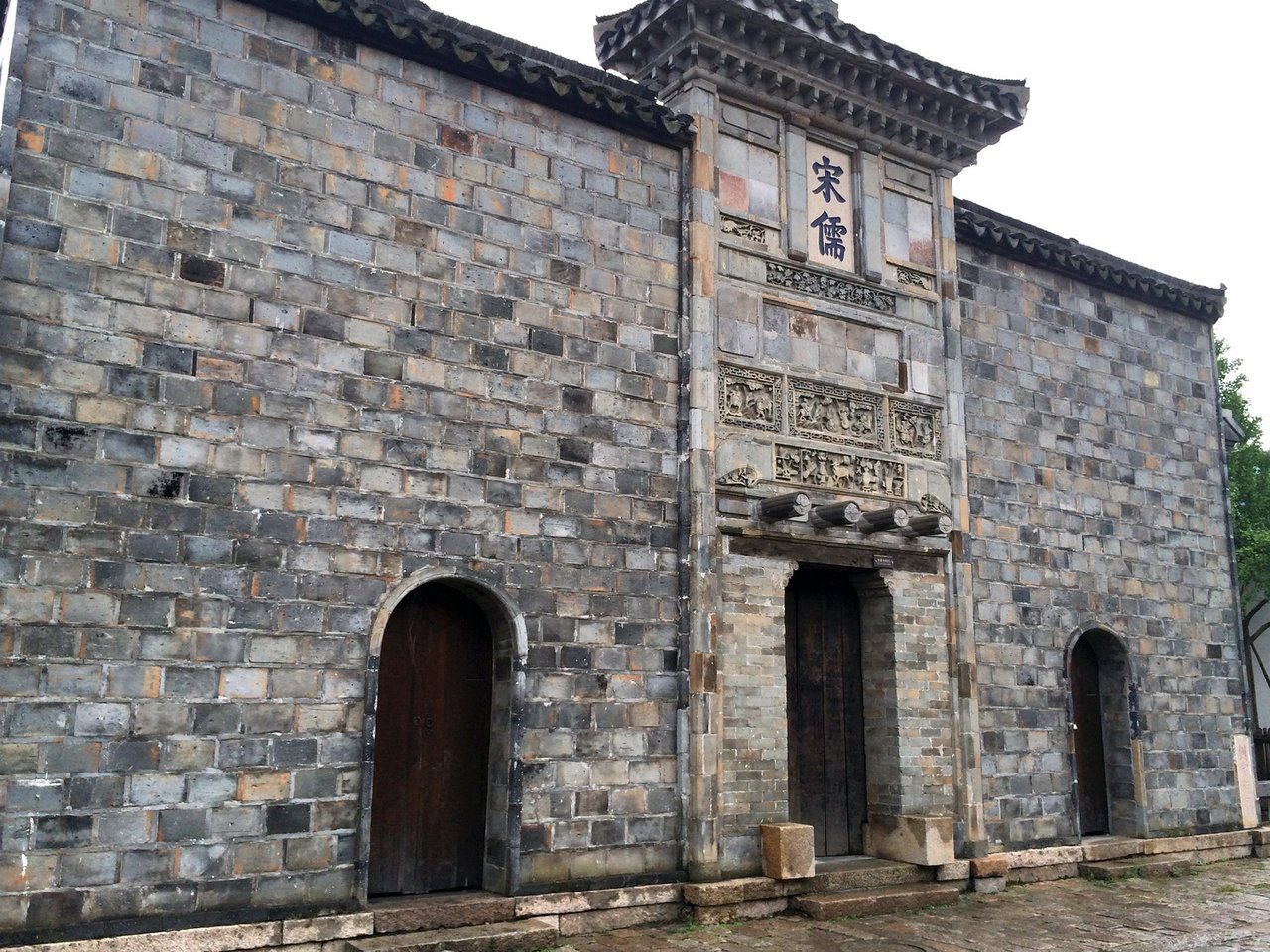
The straight street, formally Xiuzhang Street, was the pilgrim road to Huishan Temple and was about five li long, so people called it Five Li Street. Chinese Wikipedia says that when Qianlong stayed at Jichang Garden on his southern tours, local officials repaved it with costly Jinshan granite, and a saying grew up that you could walk Huishan's street in new shoes after rain. The cross street runs along the river. The shrines open off both, some as small museums, some with little gardens of their own.
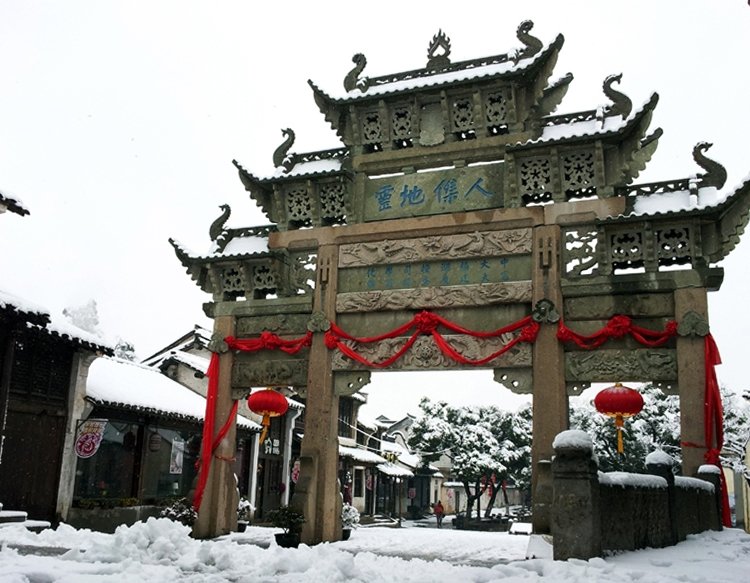
After 1949 many shrines were occupied by the army, some were pulled down, and most were let out as housing. That accidental reuse kept the street pattern intact. The shrine group became a national protected site in June 2006. In 2007 workers dug up the largest memorial arch in the town, the Qianren Baode arch, which had been pushed over and buried during the Cultural Revolution, and its recovery marked the start of restoration. The town was named a historic and cultural street in 2011 and put on China's tentative World Heritage list the following year.
The Second Spring and Huishan Temple
Huishan has many springs, and one of them became famous. Chinese Wikipedia says it was dug out late in the Dali era of the Tang by the county magistrate Jing Cheng. The tea writer Zhang Youxin later recorded that Lu Yu, the author of the Classic of Tea, ranked twenty waters for brewing and put this one second, which is where the name Second Spring Under Heaven comes from. The spring has three pools. The upper octagonal pool is said to give the best water. The lower square pool is fed through a carved stone dragon's head dated 1501, and the five large characters on the wall above it were written by the Qing official Wang Shu. The blind street musician Hua Yanjun, known as Abing, named his erhu piece "The Moon Reflected in the Second Spring" after this place, and it is still the best known solo for the instrument.
Huishan Temple next door was ruined in the Taiping wars. Its main halls were restored in 2004 and religious services resumed. Among its older relics are Tang and Song stone sutra pillars, now a national protected site, a Song bridge and lotus pond, and an old ginkgo.
What to eat and buy
Two local products grew out of the shrine economy. Huishan clay figurines began, Chinese Wikipedia says, when shrine keepers shaped toys from the fine local clay to sell to pilgrims, and there was once a whole street of makers with their own guild. The plump pair of children called Da A Fu is the classic figure. The China Clay Figurine Museum, designed by Kengo Kuma, opened in 2011 on the site of the old clay figurine factory. The other is Huishan youzu, a flaky pastry fried in plenty of oil, which temple-goers nicknamed the "navel of the vajra guardian" for its shape.
Every year on the 28th day of the third lunar month the town holds a temple fair for the birthday of the Dongyue Emperor, when the gods of eight local temples were traditionally carried to the Dongyue temple here to pay their respects. Chinese Wikipedia calls it the most important temple fair in the Wuxi area.
Tickets and hours
The streets are free and open around the clock, with no booking. The paid heritage zone, which includes Jichang Garden, the Second Spring and Huishan Temple, is sold as a combined ticket that Wuxi Bendibao lists at 70 yuan. Recent listings give heritage zone hours of about 08:00 to 17:00 on weekdays and 17:30 at weekends. Check the day's notice, and note that a separate evening session has run in summer.
Getting there
Wuxi Metro's Huishan Ancient Town station is next to the streets, and Wuxi railway station is about fifteen minutes away by taxi. Xihui Park, with the hill paths up Huishan and Xishan, adjoins it. The Qingming Bridge canal quarter on the other side of the old city makes a good evening after a Huishan day.
How long and when
Allow two hours for the streets, and three to four with the garden, the spring and the temple. Weekday mornings are calmest. National holidays fill the streets.
Things to confirm before you go
- Which combined ticket you need for the garden, spring and temple.
- Heritage zone hours and last entry.
- Whether the temple fair or a summer evening event is on.
- Which individual shrines are open, as they vary.
Frequently asked questions
Is Huishan Ancient Town free?
Yes, the streets are free. The heritage zone with Jichang Garden, the Second Spring and Huishan Temple needs a ticket.
Why is it called the Second Spring Under Heaven?
The Tang tea expert Lu Yu ranked it second among twenty waters for making tea, according to a Tang record.
What is Huishan known for besides shrines?
Clay figurines, oily youzu pastries, and Abing's erhu piece named after the spring.
How does it compare with other Jiangnan water towns?
It is smaller and more religious in feel. The draw is the shrine architecture and the hill behind, and there are fewer canals than in the towns around Suzhou.
Sources
Facts in this article were checked against the following sources, retrieved 8 October 2026.
- 惠山镇祠堂, Chinese Wikipedia
- 天下第二泉, Chinese Wikipedia
- 惠山寺, Chinese Wikipedia
- 惠山泥人, Chinese Wikipedia
- 无锡寄畅园门票多少钱, Wuxi Bendibao
Photos are from Wikimedia Commons under the licences shown in each caption.