Daming Temple: Finest Sight on Shugang Hill
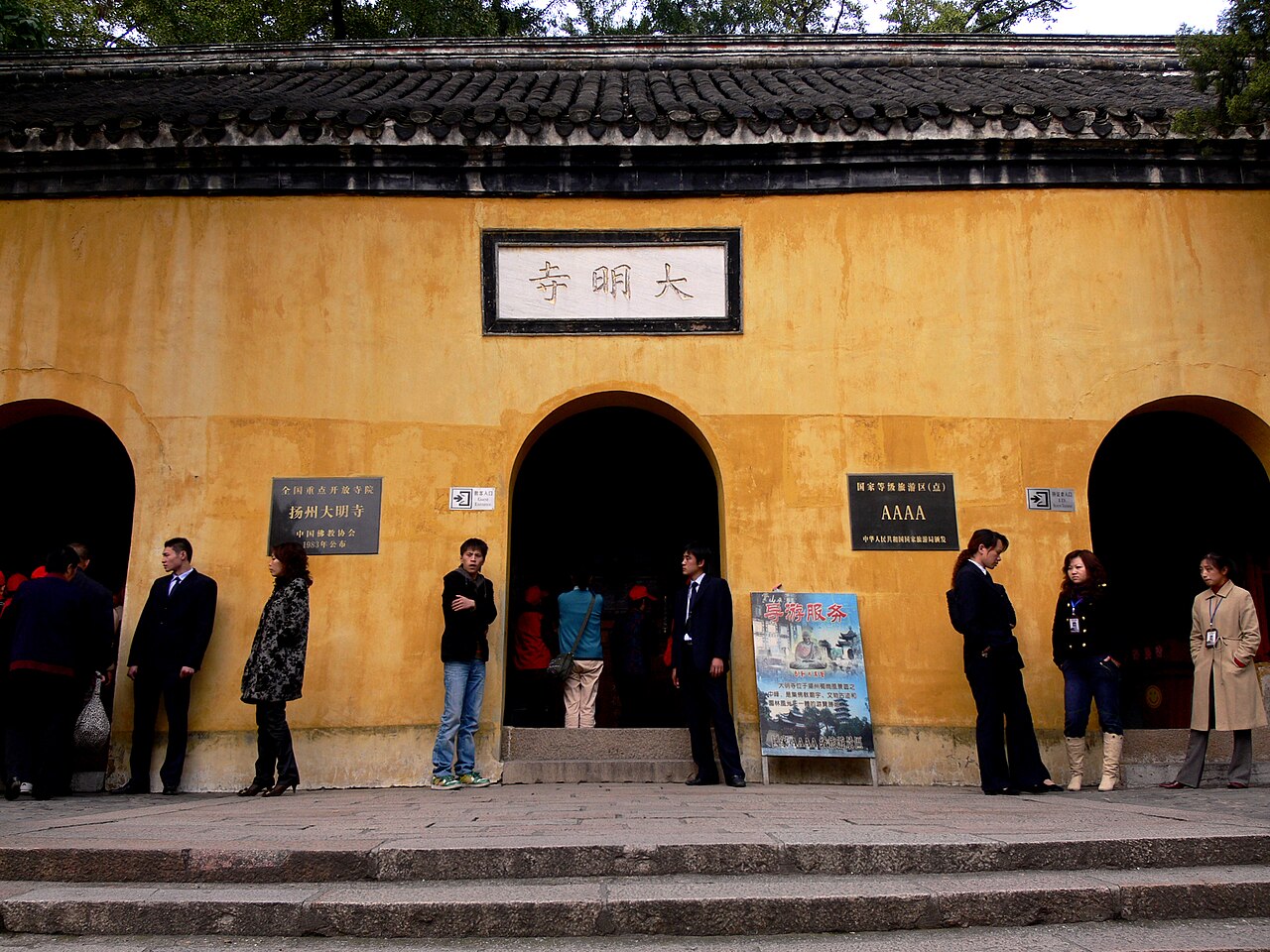
Daming Temple crowns the middle peak of Shugang at the north end of Slender West Lake. Founded in the Southern Dynasties, it is where the monk Jianzhen lived and taught before his six voyages to Japan; an old saying calls it the finest sight in Yangzhou. The compound is a nationally protected cultural site and home to the Jianzhen Memorial Hall, built on Premier Zhou Enlai's instruction with design work by Liang Sicheng, keeping Tang-style architecture alive in the city. Temple and lake share one day in the Yangzhou itinerary—finish the water scroll, then walk up the hill.
Jianzhen and the memorial hall
Jianzhen's failed and finally successful crossings to Japan are part of East Asian Buddhist history; the memorial hall gives that story a Tang-flavoured architectural home in Yangzhou. Move quietly inside. This is an active religious site as well as a heritage stop—remove hats where required, keep voices low, and follow no-photography signs. Do not treat ordination history as costume drama for group photos.
Qiling Pagoda and city views
The Qiling Pagoda was first built in 601 in the Sui dynasty; Li Bai, Gao Shi and Liu Changqing all climbed earlier versions and left poems. Today's rebuild opens views over the city when stairs and hours allow. Climb only if knees and crowd density permit; the view is a bonus, not a mandatory fitness test. Confirm whether the pagoda is open on your visit day—maintenance and weather close towers without much notice.
Pingshan Hall
Pingshan Hall on the grounds was built by Ouyang Xiu when he governed Yangzhou in the Northern Song. Sitting there, the hills of Jiangnan seem to bow before the railing—hence the name. It is a literary pause after Buddhist halls: bring the lake morning into a quieter Song-scholar mood before you descend toward lunch and, later, Dongguan Street.
Timing with the lake
The city guide's day one puts Slender West Lake first, a light lunch at the foot of the hill, then the temple in the afternoon. Reverse order works if you want cooler temple hours in summer, but the classic lake-to-hill flow matches light and energy. Tickets follow official notice; this page does not invent yuan amounts. April viburnum blooms can colour both lake and temple grounds—beautiful and busy.
Things to confirm before you go
- Temple hours, ticket channel and pagoda access for the day.
- How you will walk or ride from the lake exits to Shugang.
- Modest dress and photography rules inside halls.
- Water and shade for the hill in summer heat.
- Evening plan toward Dongguan Street.
Etiquette
Stay off grass where signed, do not touch statues or offerings, and give worshippers space. Incense smoke and tour groups both peak midday—patience beats elbowing for a railing spot. If a steward redirects a queue, follow without argument.
Quick decisions
Temple only or with the lake?
With the lake on the same day whenever the calendar allows.
Must I climb the pagoda?
No. Halls and Pingshan Hall already justify the stop.
Morning temple?
Fine in hot months; otherwise follow the lake-first spine.
What next?
Dongguan Street evening; keep Geyuan and Heyuan for day two.
Jianzhen for travellers who are not specialists
You do not need a thesis on Tang monastic vinaya to appreciate the memorial hall. A short read the night before—six attempts, arrival in Japan, lasting temple links—makes the architecture land. Inside, focus on proportions and quiet rather than collecting every plaque photo. If Japanese tour groups are present, share space; the site matters on both sides of the East China Sea.
Hill logistics
Shugang is a modest hill, not a mountain scramble, but summer heat and stair flights still tire lake walkers. Carry water, rest at shaded landings, and skip the pagoda if anyone feels dizzy. Buses and taxis fill gaps if the walk from lake exits feels too long after Three hours of bridges—pride is a poor navigator.
Connecting poetry to place
Li Bai's Yangzhou lines and the poets who climbed Qiling belong to the city's brand. Standing on Shugang after Slender West Lake makes those schoolbook scraps feel geographic. That is enough literary tourism; you need not recite on the railing. Descend toward lunch with the lake still in your eyes and the temple's Tang-Song layers sorted into memorial, pagoda and Pingshan Hall.
Season and light on Shugang
April colour and autumn clarity are the kindest. Summer afternoons on the hill can feel close and humid after a lake walk—carry water and slow the stairs. Winter is quieter; halls stay worthwhile if you dress for wind at the pagoda. Viburnum weeks draw extra visitors to both temple and lake; share railings and keep incense areas clear. Whatever the month, leave ten unscheduled minutes so a closed pagoda door or a sudden shower does not sour the stop.