Dongguan Street: The Free Axis of Old Yangzhou
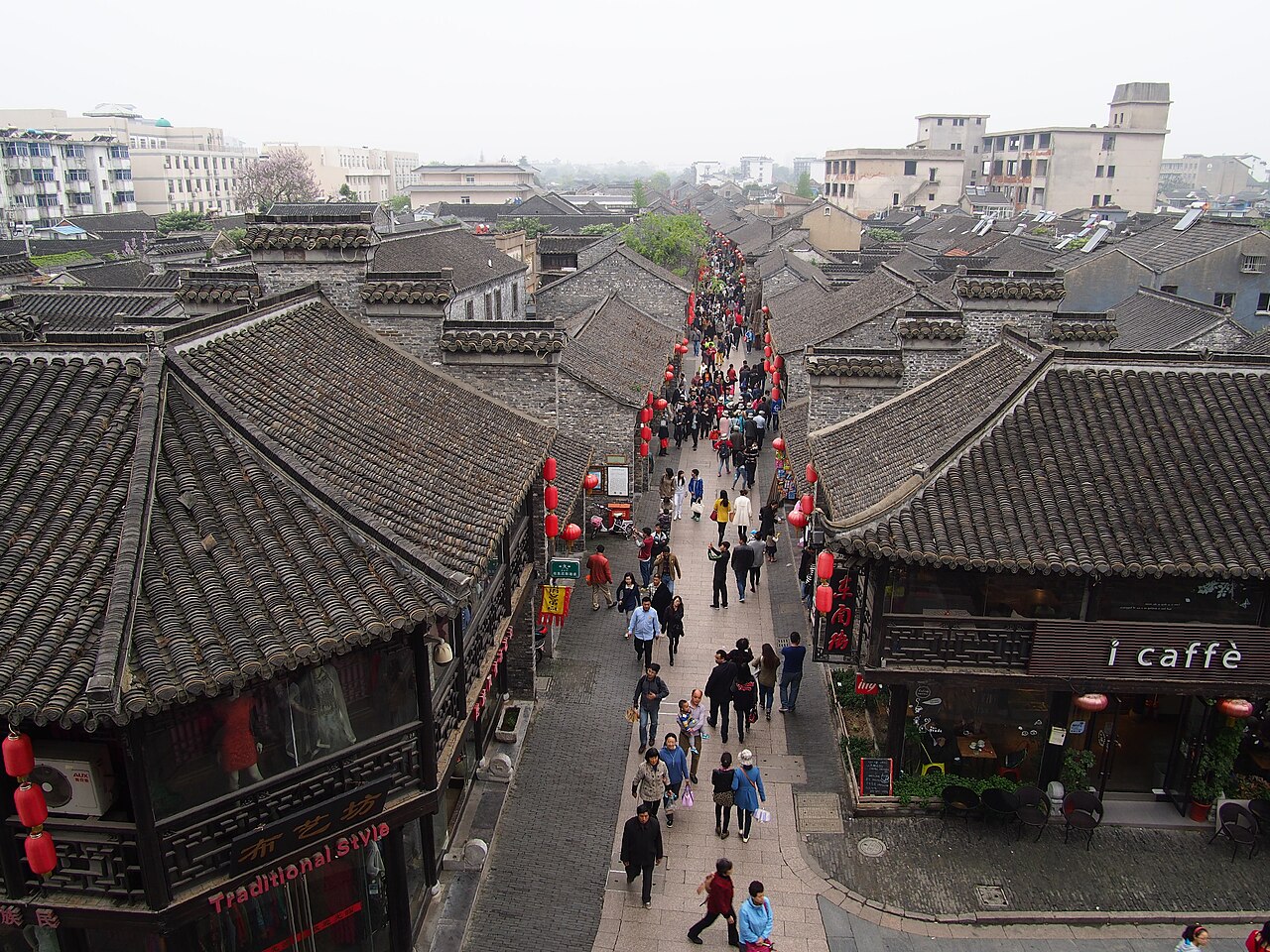
Dongguan Street is the axis of Yangzhou's old town, running from the ancient canal wharf into the city, with a thousand years of canal trade pressed into one lane. The road is narrow, paved in bluestone, lined with old shops, sauce gardens, teahouses and craft workshops, and it holds protected sites of its own. Geyuan sits just off the street; the Yipu compound at No. 356 is another salt-merchant residence, also nationally protected. The street itself is free and strings together half of central Yangzhou's sights. Evening is best, when day-trippers thin and lamps come on. City pacing is in the Yangzhou guide.
How to walk it
Drift rather than march. Buy a Huangqiao baked bun or a bowl of shredded tofu (dadou gansi), then continue toward the old wharf where canal wind meets the lane. Xie Fuchun perfume-powder shop, a brand from the Daoguang years, still trades here—a practical gift stop if you want something local beyond fridge magnets. Compare prices, keep receipts, and do not block shop doors for photos.
Daytime works for Geyuan access and clearer shop browsing; evening wins for atmosphere. Many visitors do both: morning garden, afternoon Heyuan, night return to Dongguan lamps.
Food without the famous-teahouse panic
Fuchun and other celebrated morning-tea houses queue early—six or seven for the famous rooms, or duck into a neighborhood teahouse. Around Dongguan and Ganquan Road the small shops are down-to-earth. Huaiyang sweetness lifts flavour; heavy-taste eaters may wince at first and keep eating by the third bite. Yangzhou fried rice, salted goose and crab-powder lion's-head meatballs belong to the wider city menu; use the street as forage, not as the only meal plan.
Linking the salt-merchant day
Dongguan is the hinge between free street life and ticketed gardens. Without it, Geyuan feels isolated; with it, the merchant city makes sense. Pair evening Dongguan after a Slender West Lake and Daming Temple day, or after the two-garden day. Keep the China Grand Canal Museum on its reservation morning elsewhere—do not force museum legs and street browsing into one exhausted blur.
Things to confirm before you go
- Comfortable shoes for bluestone and standing snacks.
- Cash or payment apps for small stalls.
- Geyuan hours if the garden is on the same morning.
- How late you want to stay for lamps versus sleep before a museum day.
- Bag awareness in dense evening crowds.
Manners on a living street
Residents still use these lanes. Keep noise down near housing gates, do not drone over courtyards, and leave delivery scooters a path. Smoking rules and litter bins are ordinary courtesy. The street works when visitors match its pace instead of treating it like a mall race.
Quick decisions
Morning or evening?
Evening for lamps; morning for garden access and cooler walking in summer.
Must I shop?
No. Wharf wind and bluestone alone justify a slow loop.
How long?
One to two hours, longer with tea and Geyuan.
What pairs best?
Geyuan on the street; Heyuan by short ride; lake-temple day ending here for dinner.
Craft and sauce without the checklist
Sauce gardens, pastry shops and perfume powder are living trades, not only tourist props. Buy what you will use. Ask before photographing artisans at work. Xie Fuchun is famous; other counters may suit your budget better—compare. Shipping liquids and powders can be awkward on flights; pack smart or ship from a larger store if staff advise it.
Night safety and comfort
Lamps make the street photogenic and busier. Keep phones secured, agree a meeting point if your group splits for snacks, and watch slippery bluestone after rain or spilled drinks. Close shoes beat heels on uneven slabs. The wharf end can be windier—carry a light layer even after a muggy day.
Stringing central Yangzhou
From Dongguan you reach Geyuan on foot, Heyuan by short ride, and lake-temple days by bus or taxi. The street is the free glue in the three-day plan. Travellers who only taxi between ticketed gates miss the canal-town texture that made salt wealth visible at street scale. Budget at least one unhurried evening here.
Morning tea logistics near the street
If you want Fuchun's classic trio—three-delicacy buns, crab-roe soup dumplings, thousand-layer oil cake—with Kuilongzhu tea, go at six or seven or accept a neighborhood substitute. Stretching morning tea from dawn into mid-morning is a local habit; tourists who arrive at ten meet the queue wall. Pair an early tea day with a later lake start, or keep tea for the garden day when Geyuan opens after you eat. Sugar levels in Huaiyang pastry surprise some travellers—share plates and taste before ordering a second round.