Heyuan: The Late Qing's Double-Deck Garden
Heyuan, formally the Xiaoxiao Mountain Villa, is the private garden of He Zhidao, a late-Qing intendant. Yangzhou people simply call it the He Garden. Decades newer than Geyuan, it is often crowned the first garden of the late Qing. Its fame rests on the double-decker winding corridor that runs through the compound: two-level turning galleries divide front residences from the rear garden, walkways rising and dipping between halls, lattice windows punched through sandwich walls—walk the corridor and scenery travels past the windows, which earned it the nickname of an early overpass. The garden lies in the Nanhexia historic district, about ten minutes by car from Geyuan. City pacing is in the Yangzhou guide.
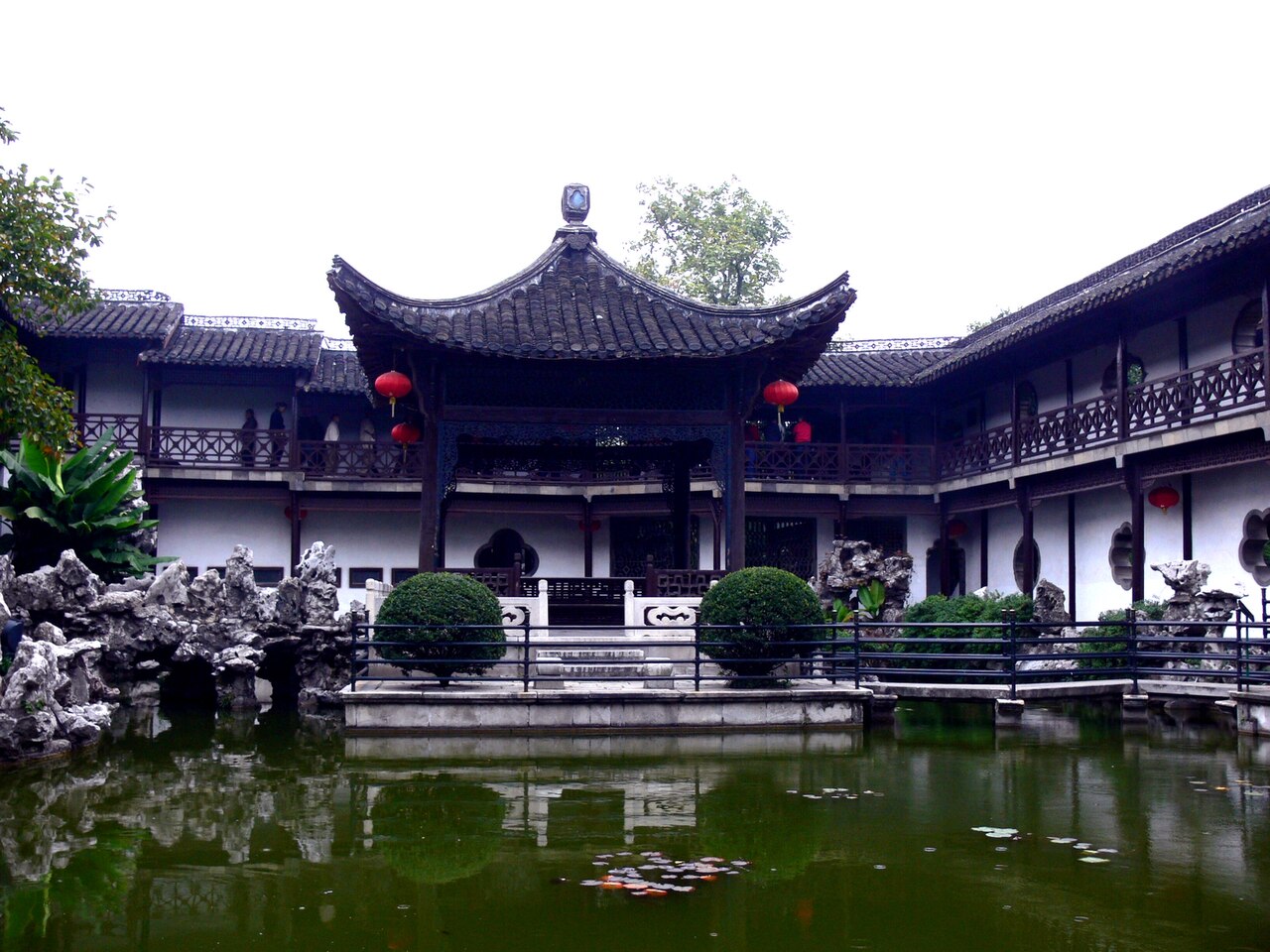
Walk the corridor properly
The double-deck path is the signature. Do not treat it as a race track. Pause at lattice windows, notice how levels separate private and garden life, and let the "scenery moves with you" trick work. Rushing upstairs and down only for a workout misses the design. Watch your head and steps; older visitors should use handrails and rest on landings.
East meets West in one courtyard
Heyuan also sets Chinese halls and Western houses together. The Yuxiu Building is a full Western-style residence with shutters, fireplace and French railings—an eye-opener in late-Qing Yangzhou. That hybrid taste is part of the garden's late-Qing story, not a modern hotel accident. Read it as merchant-era cosmopolitanism under Chinese garden rules. Tickets follow official notice; this page does not invent yuan amounts. The site is nationally protected—no climbing furniture or touching fragile woodwork.
Pairing with Geyuan
See both in one day for two schools of salt-merchant gardening: Geyuan for Four Seasons rockery, Heyuan for corridor theatre and East-West mix. Morning Geyuan on Dongguan Street, lunch nearby, afternoon Heyuan, tea back in the old town. If you must choose one, Geyuan wins for rockery fame; Heyuan wins if corridor architecture interests you more.
Things to confirm before you go
- Hours and ticket channel; transport from Dongguan/Geyuan.
- Mobility needs—stairs and uneven levels are real.
- Photography rules inside furnished rooms.
- Water and a slow pace in muggy summer.
- Evening return to Dongguan lamps or hotel.
Courtesy in furnished spaces
Keep bags from scraping carved rails. Speak softly in small halls. Do not open closed doors. Children should stay with adults on upper corridors. Tripods that block the double-deck flow frustrate everyone—handheld is enough.
Quick decisions
Morning or afternoon?
Afternoon fits the city guide after Geyuan; morning works if you reverse the pair.
Skip if short on time?
Yes—cut Heyuan before Geyuan if only one garden fits, unless corridor design is your priority.
Same day as the lake?
Better not. Lake and Daming Temple already fill day one.
What else?
Canal Museum on its own day; Dongguan Street free before or after.
Late Qing taste without nostalgia fog
He Zhidao's era saw treaty ports, new materials and shifting elite fashion. The Western residence inside a Chinese garden is evidence of that moment, not proof that older gardens are "purer." Walk both vocabularies: verandah and courtyard, fireplace and rockery. Guides who dismiss the Western house as fake miss the historical point of Heyuan.
Time budget
Ninety minutes to two hours covers corridor loops, main halls and the Yuxiu Building without rushing. If Nanhexia alleys tempt you afterward, leave buffer before dinner. Combining Heyuan with a forced night run to the Canal Museum usually ends in fatigue—protect museum reservations for their own morning.
Access and fatigue
Upper corridors reward the climb but punish knee injuries. Ask staff about accessible routes if needed; not every level will be step-free. Travel companions can split—some sit in a courtyard while others complete the upper loop—then reconvene at the exit. Garden days succeed when the schedule includes that kindness.
Nanhexia after the garden
The historic district around Heyuan rewards a short wander once you exit: brick lanes, residual merchant fabric, fewer souvenir carts than Dongguan's peak strip. Use it as a cool-down, not a second checklist. If rain starts, covered corridor memories already paid for the ticket; hurry to a taxi rather than soaking the upper deck for one more photo. Evening tea back near Dongguan or Ganquan Road resets the palate for Huaiyang supper.
Why the overpass nickname sticks
Calling the corridor an early overpass is playful shorthand for stacked circulation, not a claim that Qing Yangzhou invented modern highways. Still, the joke helps first-time visitors look up and down instead of only into courtyards. Once you notice how servants, guests and family routes could separate by level, the villa plan clicks. That click is Heyuan's teaching moment—linger until it happens, then exit without greedily redoing every flight.