Slender West Lake: A Scroll of Salt-Merchant Water Gardens
Slender West Lake lies northwest of Yangzhou's old city, originally a stretch of moat. Through the Ming and Qing, salt merchants of the two-Huai salt administration spent fortunes hiring master gardeners along its banks, working the water into a long scroll of pavilions, willows and bridges. Qing writer Li Dou recorded its splendour in his Yangzhou Painted Boats Record. Today the lake is a national scenic area and a 5A attraction; of the traditional twenty-four lake views, White Pagoda in Sunny Clouds and the Five Pavilion Bridge stand where the water opens widest. It is day one in the Yangzhou plan—read it as a garden, not as a smaller Hangzhou West Lake.
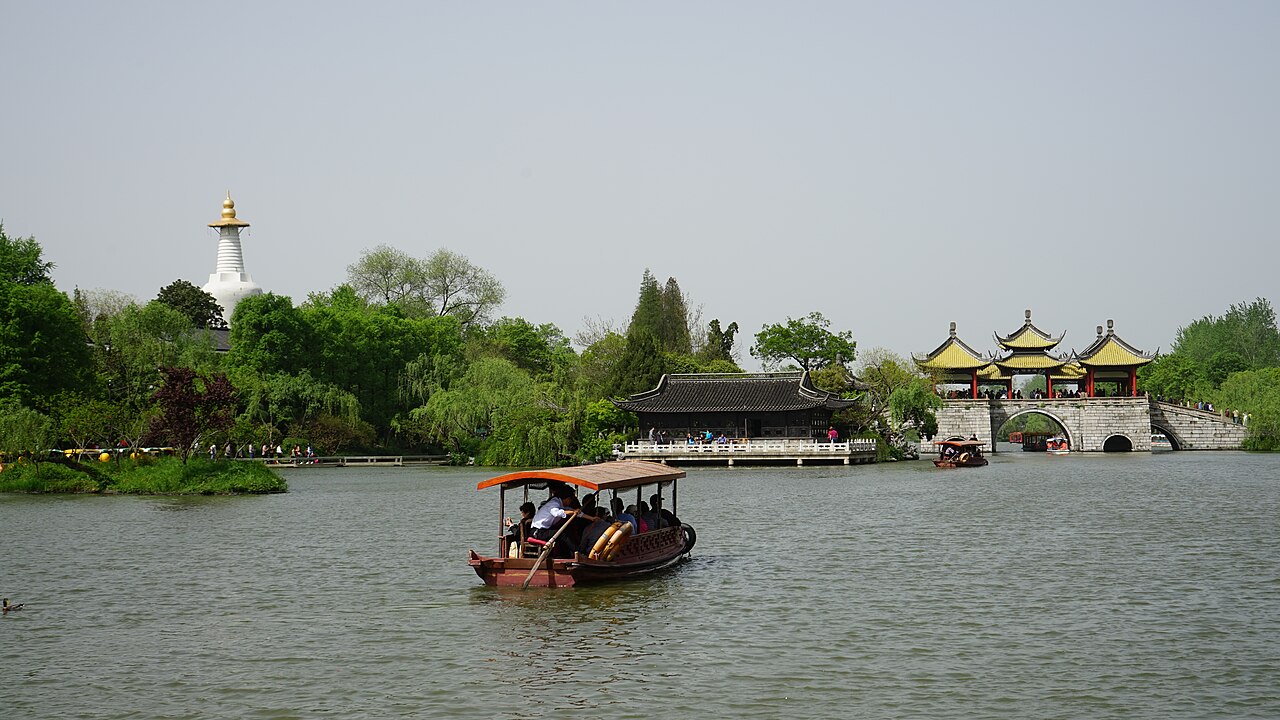
Five Pavilion Bridge and the White Pagoda
The Five Pavilion Bridge reads like a lotus on the water: five pavilions in a line over fifteen arches. On a full-moon night each arch can hold its own moon reflection, which is why the bridge doubles as the city emblem. The White Pagoda nearby carries a salt-merchant legend—stacked overnight in salt sacks to please the Qianlong Emperor—unverifiable, but the tale flatters the lake. Photograph both from the open water rather than racing past for a single selfie angle; the pair is the lake's visual centre.
Yangzhou's city flower, the viburnum (qionghua), blooms around April at the lake and at Daming Temple; exact weeks shift with temperature. "Misty flowers of the third month" (lunar) is peak willow-and-peach season and peak crowd season—enter early.
How to walk it
Enter at the Great Rainbow Bridge and walk toward Twenty-Four Bridge. Two to three hours on foot covers the main ribbon without jogging. Painted pleasure boats are ticketed separately from admission; the boatman can narrate stories while you rest your feet. Confirm boat and entry prices on official notices—this page does not invent yuan amounts. In season, tickets sell ahead; the city guide suggests aiming for the early opening window (commonly listed around 7:30) for thinner crowds and softer light.
Wear comfortable shoes. Garden-hopping is mostly walking. Spring catkins bother some allergy sufferers—pack a mask. Summer is muggy; carry water and an umbrella. Winter leaves gardens bare, though snow on the lake is another picture if you accept cold and shorter hours.
Not Hangzhou's West Lake
Hangzhou's West Lake is open lake-and-hill country. Slender West Lake is a narrow, merchant-funded garden scroll. Comparing surface area misses the point; comparing pace and detail does not. Slow down at bridges, corridors and willow bends. If you only chase the Five Pavilion Bridge photo and leave, you have used the lake as a backdrop, not as a garden.
Pairing the same day
Finish the lake and continue up Shugang to Daming Temple—temple and lake share one travel line and make a perfect single day. Evening belongs to Dongguan Street for dinner and lamps. Keep Geyuan and Heyuan for the salt-merchant garden day, and the China Grand Canal Museum for its own reservation morning.
Things to confirm before you go
- Entry ticket and any separate boat ticket via official channels.
- Opening time and whether peak-season advance booking is required.
- Weather, allergy masks for catkin weeks, and walking shoes.
- Meeting point if you split lake walk and temple climb.
- How you will reach Dongguan Street for dinner.
Crowds and courtesy
Peak April weekends pack bridges. Step aside for photos, do not block arch views with tripods in the flow, and keep voices moderate near quieter willow stretches. Drones may be restricted—ask staff. Stay on paths; soft banks erode under shortcut traffic.
Quick decisions
Walk or boat?
Walk for detail; boat for rest and storytelling. Many do both: walk the emblem stretch, boat a quieter arm.
Morning or afternoon?
Morning for light and fewer people; afternoon still works if you accept crowds in season.
Same day as Daming Temple?
Yes—that is the city guide's day-one spine.
What else the trip?
Gardens and Dongguan on day two; Canal Museum on day three.
Painted boats without the hard sell
Boat touts appear near popular landings in peak weeks. Confirm whether your ticket is the official scenic-area boat product before boarding. A short water pass can save legs between emblem bridges; a full circuit is optional. If queues for boats exceed your patience, the bank walk still delivers the garden scroll—willows, pavilions and the Five Pavilion Bridge silhouette do not require a hull.
Listen for Li Dou–style stories from boatmen as colour, not as sworn archaeology. The salt-sack White Pagoda tale is folklore; enjoy it as folklore. Bring a light jacket for breeze on the water even in warm months.
Food before or after
Heavy Huaiyang lunches before a long walk slow everyone down. Consider a light bite near the lake exits, then fuller morning tea or dinner on Dongguan later. Crab-roe buns and oil cake belong to the teahouse ritual more than to lakeside snack carts—save Fuchun-style queues for a morning when the lake is not your legs' only job.
Photography that does not block the bridge
The Fifteen arches invite centre-frame shots. Take yours, then move so the next visitor gets the moon-arch myth angle too. Sunset and blue hour draw crowds; sunrise openings reward early risers with emptier stone. Tripods in the main flow are unkind on busy April weekends.